What Brands Look For in UGC Creators (and Why Most Get Dropped)
Key takeaways
- Vansh Sobti, founder of Cloud9 Clothing, says the creators he keeps resonate with the brand's mission. He says he can feel it when someone only wants a payday.
- The top thing he saw separating good creators was research: digging into niche angles and hooks for his audience instead of copying viral videos or his website.
- He suggests putting an example video tailored to the brand in your first pitch. He says his team tends to ignore script DMs, and some arrive with the wrong company name.
- Vansh calls AI an amazing tool when used for ideas, and says a word for word ChatGPT script is obvious right away.
- He told Gloria he actually prefers creators who are just getting into UGC because they are hungrier and more passionate about doing the work well.
Vansh Sobti has fired UGC creators after a single video. He has also hired me every single month for the past 16 months without skipping, and between my creator work and our agency, that one brand adds up to over $40,000 in deals.
Vansh runs Cloud9 Clothing, sensory clothing for people with anxiety, ADHD and autism. The main product is a hoodie with discreet stress balls in the cuffs, so you can fidget in public without a bulky fidget spinner.
Dozens of creators have worked with him. Most did not last.
So I sat him down on camera and asked what brands look for in UGC creators, starting with one question. Why me, over creators with bigger portfolios, more experience and more followers?
He said it had nothing to do with any of that.
Then I asked the question every beginner is scared to hear answered: would you actually hire someone with no experience? He said yes, and that he prefers it.
Below is his answer in his own words, plus what I learned from talking to over 100 brand owners in one year. UGC means user-generated content: short videos real people film on their phones that brands post on their pages and run as ads. If you are brand new to it, start with what UGC is and how it works.
What do brands look for in UGC creators?
Brands look for creators who care about the brand's mission, research the product and audience, and bring their own ideas. Vansh said a bigger portfolio, more experience and more followers had nothing to do with why he picked me.
For the first year, Vansh made every video himself. Cloud9 is fully bootstrapped, and he was also running marketing and customer support, so after a couple of months his content quality dropped.
That year of filming taught him what his audience wanted to see. After that, he looked for creators who resonated with it. His short list, from our whole conversation:
- A real connection to the mission and a wish to see the brand grow.
- Research on the brand, instead of copies of whatever went viral.
- A pitch made for that one brand, written in your own words.
- Stories over hard selling.
On top of that, he keeps creators who tell the truth when something goes wrong and bring ideas so he has less to manage.
Every point on that list is something you control today, with zero clients.
Why does mission fit beat a bigger portfolio?
Mission fit wins because brand owners can tell when a creator is faking interest, and so can the viewers watching the ad. Vansh turned down creators for exactly this reason.
I think it's super easy to tell when a creator is just faking being interested in a brand just for the sake of having a payday versus a creator who actually resonates with the mission.
Vansh Sobti, 0:06:37
He was clear that you do not need the problem the product solves. You need to understand who it helps and actually care about that.
It doesn't mean that the creator has to have specific problems that the brand is solving. Like they don't need to have anxiety or ADHD or autism or so on. The main thing is actually resonating that they know that this is solving a problem and they're interested in aligning with their mission.
Vansh Sobti, 0:07:38
When a couple of Cloud9 videos started doing well, creators flooded in asking to take over his UGC, his Instagram, his TikTok. Most led with their résumé: UGC for some brand, certain results. He said that was great, and it still told him nothing about whether they would care for his brand.
What he remembered about me was my energy. I mentioned my past work, and then I moved on to what I would do for him.
It was more so this I know, you know, I know how to do UGC, but this is what I'm going to do for you, which I found very different.
Vansh Sobti, 0:09:41
Before you pitch, write one sentence about who this product helps and why that matters to you. If you cannot write it, pick a different brand.
Research the brand's audience and hooks before you pitch
Research is the number one difference Vansh saw between me and the other creators he worked with. Most of them copied videos that had gone viral before, or repeated the messaging from his website.
The number one thing is actually doing research, which I feel like Gloria does a lot of. The other creators more so go off of other videos that maybe went viral or the messaging we have on our website, whereas Gloria, she would do a deeper dive on specific niche marketing angles or hooks that really attract our audience.
Vansh Sobti, 0:11:15
A hook is the first line or first few seconds of a video, the part that decides whether someone keeps watching. Vansh said copying past viral videos works for a certain amount of time. He wants someone who also tests different types of content for his specific audience.
Before you film anything for a brand:
- Read the website and watch its recent videos, so you know the messaging it already uses (where most creators stop).
- Write down who actually buys the product and what problem it solves for them.
- Draft a few angles and hooks aimed at that buyer that the brand has not tried yet.
- Plan to test different styles instead of remaking one video that went viral.
How do brands choose UGC creators from a pitch?
Brands pick the pitches that prove the creator made an effort for that one brand. Vansh's top tip was to include an example video tailored to the brand in your very first outreach.
He told me about a friend who runs an energy drink brand. That friend's current UGC creator did not have the product yet, so he grabbed a random Red Bull can and filmed a sample video pretending it was the friend's drink.
It shows that the creator actually wants to work with them. It's not just an automated DM to hundreds of different brands.
Vansh Sobti, 0:12:47
The opposite is what lands in his inbox every day. Cloud9 gets DMs from creators who want to make UGC, and many of them are generic scripts. Some have the wrong company name. One opened with "hey Paul Prince," and Vansh had no idea who Paul Prince was.
If you are using scripts, make sure you actually tailor the wording so that it doesn't seem like a script. Um cuz all the script DMs we usually just tend to ignore.
Vansh Sobti, 0:24:38
My take as a coach: the way you write the email is the way you will make the content. A copy and paste pitch tells the founder to expect copy and paste videos.
Film a short sample for that one brand and put it in your first message. No product yet? Do what the Red Bull creator did and use something that looks similar. Then check the brand name twice, and rewrite any template line until it sounds like you. For a full walkthrough of the first message, read how to pitch brands for UGC.
Use ChatGPT for ideas, then write it in your own words
Vansh is fine with AI. What he does not want is a script copied straight out of ChatGPT, and he says he spots one right away.
AI is an amazing tool if used correctly, especially for UGC nowadays. You can tell right away when it's a straight word for word ChatGPT script rather than getting ChatGPT to give you specific ideas and then coming up with your own wording, you can tell the difference right away.
Vansh Sobti, 0:21:34
When I asked him the number one thing that kills a relationship before it starts, he said it was creators who skip their own original creative thought and only follow what is trending.
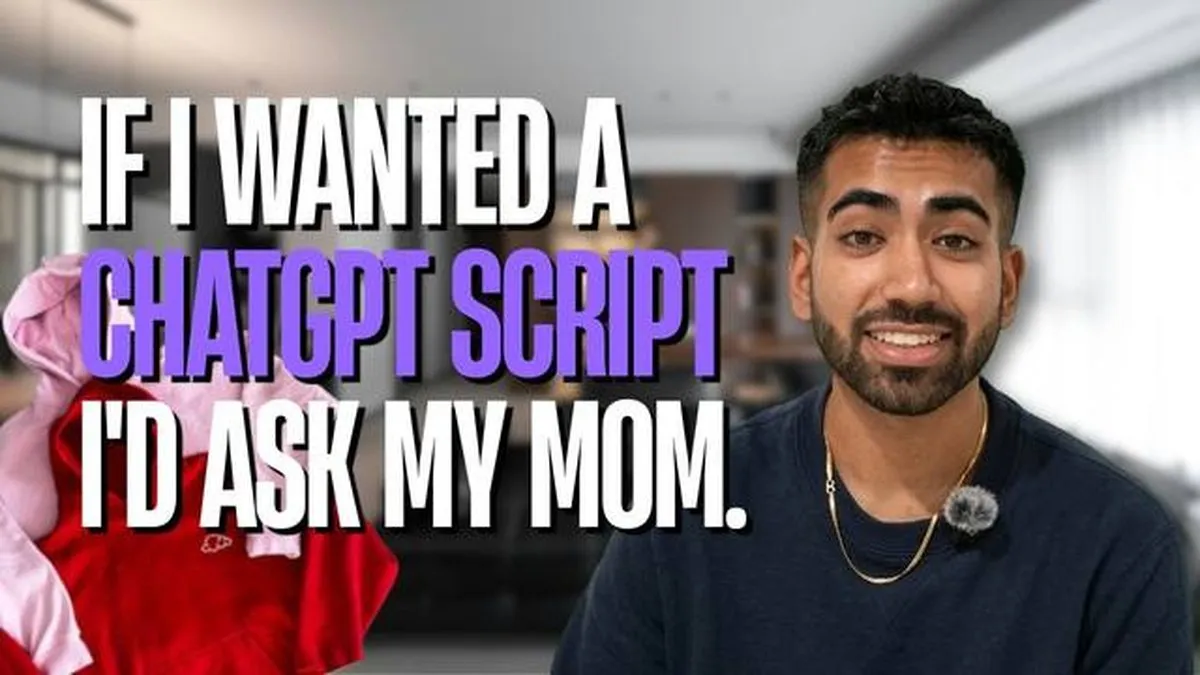
He also explained why brands pay creators at all. If all he wanted was a ChatGPT script read on camera, he said he would ask his sister, his mom or a friend to read it. He pays a UGC creator for their own touch and their own style.
The same goes for templates. Vansh said creators he worked with in the past repeated whatever template their UGC coach taught them, over and over. The creators he works with now still start from templates, and they customize every one for his brand.
Ask AI for angles, pick the one that fits the buyer, then say it the way you would say it to a friend.
Sell with a story, because nobody wants to be sold to
Vansh says the most important thing is whether viewers actually care after the first couple of seconds. Curiosity and story keep people watching. A hard sell makes them swipe.
He gave me two hooks to compare. "Don't walk, run to this clothing brand because they have cool stress ball hoodies" is so overused that he scrolls past it. Then he offered "Your anxiety is going to disappear after using this hoodie." That one made him curious, because how does a hoodie help anxiety? His test: if a hook sparks curiosity in him, it will spark curiosity in someone who has never heard of the brand.
Run that test on your next hook. If it sounds like "You have to purchase this," rewrite it as a question the viewer needs the video to answer.
No one likes being sold to, so as soon as people realize it's an ad, they're going to swipe away. Whereas if you get them involved in a story that they want to see until the end, even if it is an ad, they're going to watch.
Vansh Sobti, 0:37:54
That kind of content has worked for Cloud9. Vansh said their socials grew by over 100,000 followers across Instagram and TikTok over the past year. People follow to see what the creators post next. Some buy a few videos later, and viral videos give him an audience he can retarget with paid ads, so the next ad lands on someone who remembers the hoodie.
One of my videos for him passed 500,000 views on Instagram. When you make engaging videos like that, that is when they start popping off. My UGC storytelling framework walks through how I build them.
Would a brand hire a UGC creator with no experience?
Yes. Vansh told me he actually prefers creators who are just getting into UGC.
I think I actually prefer people just getting into it rather than people who have decades of experience because people who are just getting in the field are so much more hungrier and so much more passionate for actually getting deals and actually fulfilling them in a good way. Whereas people who already have years of experience, this is just another gig for them.
Vansh Sobti, 0:27:43
When we started working together, I was pretty new to UGC myself.
Being new is the biggest objection I hear as a creator coach. People hold off pitching because they think no brand will want them yet. In Vansh's eyes, your hunger is the selling point. You are also less likely to sound like a template someone else taught you.
So wear being new like a badge. Put that energy into the pitch, the research and the example video.
What keeps a brand paying you month after month?
Honesty and proactiveness kept Vansh with me. He named honesty as the communication habit he wants, and proactiveness as the reason he comes back month after month instead of doing one-off deals.
On honesty, there were times my videos ran late. I have been traveling the world for the past 8 months, and some weeks were busy. Vansh said I was super upfront and honest about the delays.
Just being totally honest, I would say. Um instead of making excuses or coming up with fake scenarios of why videos weren't being posted or why video quality may have went down.
Vansh Sobti, 0:13:48
On proactiveness, he does not want to micromanage captions and hooks. When creators bring the ideas, that work comes off his plate and he gets time to grow the business. He also told me he sits down at the end of every week and watches every creator's videos, so effort gets seen.
When I asked for his retention tips straight out, he added two more: a real alignment between creator and brand, and actually enjoying making content. He said people feel energized after watching my videos because I love trying out different types of content.
Vansh paid me over $25,000 on the creator side. On the agency side, where my business partner Alexander and I place creators with his brand, it was about $15,000. Together that is over $40,000 from one brand, and it started at a very different rate from where it is now.
I wrote up the habits behind it in how to keep UGC clients, and the next step after that, in turning one-off deals into a monthly UGC retainer. A retainer is a fixed monthly arrangement where a brand pays you for ongoing content instead of one video at a time.
His last piece of advice was simple: don't be afraid of trying out different things. Creators box themselves in because they worry the founder will dislike a new style. He said your originality is the strong point.
Talk to brand owners before you guess what they want
The fastest way to learn what brands look for is to ask brand owners directly. Over one year, I spoke to more than 100 of them.
Every day I get DMs from creators stuck on gifted collabs, getting ghosted, with pitches that go nowhere. I ask them one question: when's the last time you had an actual conversation with a brand owner? The answer is silence.
Early on, I spent most of my networking energy on other creators. Then I realized I was networking with my competition and not my clients.
So I moved my energy to the people who make hiring decisions: brand owners, marketing directors and agency leaders. I started going to their events, like marketing summits and local business groups, and I showed up curious about their problems instead of eager to pitch.
The winners slide into brand owners' DMs to learn, not to pitch. These are the three questions I shared in a July 2025 post to the community:
- "What's your biggest challenge with UGC right now?"
- "What made you stop working with your last creator?"
- "When you see a pitch, what immediately tells you someone gets it?"
Brands buy revenue for their business, and they hire the creator who understands that world.
A quick note: everything in this post comes from my conversation with Vansh and from my own work with Cloud9. Every brand owner is different, and your results depend on your own effort, skill and the brands you work with.
Frequently asked questions
What do brands look for in UGC creators?
Vansh Sobti of Cloud9 Clothing looks for creators who resonate with the brand's mission, research the brand and its audience, and bring their own original ideas. He told Gloria a bigger portfolio, more experience and more followers had nothing to do with why he picked her.
Do brands hire UGC creators with no experience?
Some do. Vansh told Gloria he actually prefers people just getting into UGC because they are hungrier and more passionate about landing deals and delivering them well. Gloria was pretty new to UGC when she started working with him.
Should I send an example video when I pitch a brand for UGC?
Vansh says an example video tailored to the brand in the first outreach puts a creator ahead of the others. One creator he heard about filmed a sample with a Red Bull can standing in for a friend's energy drink, which showed real effort.
Can I use ChatGPT to write UGC scripts?
Vansh calls AI an amazing tool when used correctly. Ask it for specific ideas, then write the script in your own words, because he says a straight word for word ChatGPT script is easy to spot.
About the author. Gloria Stonelake is co-founder of UGC World and Head of Creator Talent. She took home over $150K in one year from UGC, then built the agency brands pay to staff their campaigns with trained creators. Meet the UGC World team.
UGC World is a personal and business finance education and training company. Results described here are the experiences of the named creators and are not typical. Success depends on implementation and effort. We do not make claims about what you should expect to make.

