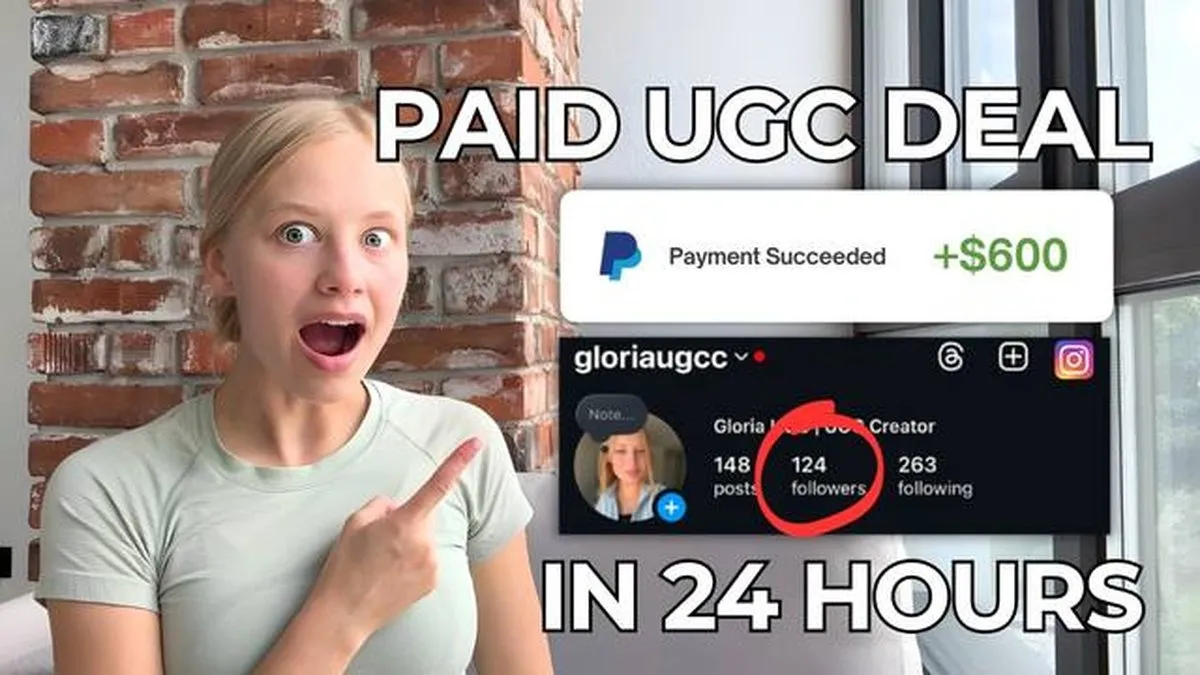
How to Pitch Brands for UGC: What a Brand's Inbox Taught Me
Key takeaways
- A person at a DTC brand that hires dozens of UGC creators a month showed Gloria recent pitches they had received, and 90% were some version of "I'd love to work with your brand" with no sign of research.
- The pitch that won that brand's $5k retainer analyzed a competitor's content, named the gaps, and proposed three specific video concepts.
- Before you write a word, study the brand's current UGC and two or three competitors, then pitch the gap you found.
- A strong first UGC pitch is three short paragraphs: where you found them and how you help, one or two video ideas, then your results or an honest beginner line, closed with a question.
- Keep the first pitch under 100 words, write it for one sub-niche at a time, and leave the portfolio link for the reply.
I was at dinner with someone who works at a major DTC brand, the kind of company that sells online straight to you. Her company hires dozens of UGC creators every month, so I asked her why so many creators complain about brands ghosting them after the first conversations.
What she said was eye-opening.
Most creators pitch us like they're asking for favors instead of offering solutions. They want us to explain our business to them instead of showing they understand our challenges.
DTC brand team member, as Gloria shared on Skool, 2025-11-10
Then she pulled up some recent pitches they had received. About 90% of them were some version of "I'd love to work with your brand," with no sign the creator had done any research.
Then she showed me one that worked. That creator had analyzed a competitor's content strategy, found the gaps in the brand's own approach, and proposed three specific video concepts. It turned into a $5k retainer, which is an ongoing deal where a brand pays a creator on a set schedule.
Every step of how to pitch brands for UGC is in that one email. The creator did the homework most of those other pitches skipped, then put it right where the brand would see it.
Why do brands ignore most UGC pitches?
Brands ignore most UGC pitches because the pitch is about the creator instead of the brand. UGC means user-generated content: short videos real people film on their phones that brands run as ads and post on their pages. A brand pays for those videos to sell product, so a pitch about how much you love making content gives them nothing to act on.
The woman at dinner said they ghost creators who clearly skipped the research. Replying would just open up questions they should not have to answer, like who their audience is, what problem the product solves and who they compete with.
If someone wants to work with us, they should know more about our business than we have to tell them.
DTC brand team member, as Gloria shared on Skool, 2025-11-10
I have reviewed dozens of pitches from beginners and from experienced creators, and the same mistake shows up again and again. The pitch talks about being a creator, loving the product and being passionate.
Brands don't care that you love their product. They care about how you're going to help them make more money from that product.
Gloria, "How to pitch brands to land PAID brand deals" (YouTube), 0:00:00
Pretend you run a brand making seven figures a year. Your inbox is full of creators asking to collab. One says "I love your brand, I use your product, I'm passionate about what you do." Another says they specialize in high performing UGC, studied your competitors and found three content strategies to help you turn more viewers into buyers. You already know which one you open.
What should you research before you pitch a brand?
Research two things before you pitch: the brand's own UGC and two or three of its competitors. No marketing degree required, just four simple steps.
-
Study the brand's current content. Go through their TikToks, Instagram Reels and Shorts. Ask which hooks are working (the hook is the first line or first second that stops the scroll), what they are missing, and whether they use UGC at all.
-
Study two or three competitors. Look for what those brands do that this brand skips. Maybe they lean into trending formats, customer reactions or before and after stories. That gap is your opportunity.
-
Turn the gap into a mini creative brief. Write three to five specific content ideas built for that brand. My examples: a daily use series that puts the product into lifestyle content, a remix of a current trend for engagement, and a testimonial format with visible results to boost conversions. It does not need to be a whole deck.
-
Put it in the email without asking for anything up front. The ideas are the pitch. You are handing them something before you ask for a single thing back.
That is how the $5k retainer pitch worked. Its creator had analyzed a competitor's content and found the gaps before sending anything, and the brand saw that creator as a partner from the start.
That creator became a strategic partner from day one. Most others are just looking for easy money.
DTC brand team member, as Gloria shared on Skool, 2025-11-10
Stuck on ideas? Once you know the gap, ChatGPT or Claude can give you video ideas on the spot. Pick the one or two that fit the brand best. For finding the brands themselves and the right inbox to send to, read how to find brands for UGC and the right person to email.
How to pitch brands for UGC in three short paragraphs
A first UGC pitch is three short paragraphs and a question. Each paragraph has one job.
Paragraph one: where you found them and how you help. Open with the brand owner's personal name if you can find it. Then say where you found them, because the first thing anyone wonders when a stranger emails is "where did you even get my email?" Answer that, then say in one line why you are writing. The line I use goes like this: my UGC can increase your sales and conversions and generate more customers through the authentic, relatable, non-ad-like feel I add to my videos.
Paragraph two: value instead of love. This is where your idea goes. One or two specific concepts, built from your research, that their creative team can take and run with. You can add that their competitors already run this kind of content, so they know it is proven.
We're not going to love bomb them, we're going to value bomb them.
Gloria, "How to land your first PAID UGC brand deal in 24 hours" (YouTube), 0:12:52
Skip "I love your product" unless you can name a specific product you used and what happened. Company owners have told me directly over Zoom that the line makes them want to puke, because they can tell you have never used it.
Paragraph three: you. Your experience goes last, after you have shown them something useful. Name the results you have so far: views, sales, a review a past brand gave you. Then close with an open-ended question before your signature, like "Would you like to see my portfolio?"
Lead with a problem the brand has, show how you help solve it, make a specific ask, and keep it under 100 words.
The swimwear pitch I roasted live, and how I rewrote it
A student came to me frustrated. She was sending three to five pitches a day and landing nothing, so I asked to see her pitch. This was part of it, word for word:
I'm a UGC creator who loves showcasing a variety of products and styles including casual, on-the-go business, swim, and more.
Student pitch, read by Gloria in "How to land your first PAID UGC brand deal in 24 hours" (YouTube), 0:04:36
No hate to her at all. She did not know better yet. But one word in there made me cringe: variety.
When you tell a brand you work with a variety of products, they hear that you understand everyone a little and them not at all.
Say you broke a tiny bone in your elbow. One surgeon does the whole body, and another specializes in that exact bone but costs a little more. You pick the specialist, because you want the exact fix for your problem. Brands pick creators the same way.
So we rewrote it live for one sub-niche: women's swimwear. It started like this.
I found your company on social media.
Gloria, "How to land your first PAID UGC brand deal in 24 hours" (YouTube), 0:09:43
Then straight to the point, with zero "I love your product" filler.
I wanted to reach out and share some UGC examples that will help you convert more viewers into sales.
Gloria, "How to land your first PAID UGC brand deal in 24 hours" (YouTube), 0:10:45
For paragraph two, I pitched one idea for a women's summer line: a 60-second authentic lifestyle video of the swimsuit worn naturally in the middle of a pool party with friends, built around how it would change the viewer's confidence that summer. People buy through emotion. An idea like that has value because their creative team can take it and run.
Paragraph three was a fill-in to complete with your own work: you specialize in conversion-driven UGC for swimwear companies, here are the swimwear brands you have made content for, and here are your results. Every line says swimwear. Then the question, then the signature.
Send that pitch only to swimwear brands. You build one campaign for that sub-niche and keep supplement and pet brands out of it. A pitch this specific can move you from 1 out of 100 brands saying "yes, send your portfolio" to maybe 10 out of 100, because the brand feels like you already know their world.
It also fixes her volume problem. Three to five a day is about 90 pitches a month, and I told her to aim for 90 a day. One swimwear pitch goes to every swimwear brand on your list, so you can send far more without writing a new email each time.
What do you say in a UGC pitch if you have no experience?
If you are brand new, you say less, and you say it honestly. You do not need past clients or followers to write a strong first pitch.
Got a lot of followers? Mention it. With no followers and barely any experience, leave all of that out and say you specialize in creating content for brands like theirs.
If you have filmed products before, even as gifted collabs or just a random product you bought, you can say you have created content for those companies. That line makes no claim of a partnership with them. It just shows that real videos exist.
You also do not have to wait until you are a top creator to pitch like this. Start with a few brands, research them deeply, and write the pitch clearly. If you still need those first few videos, start with how I would build a UGC portfolio with no experience.
Why end your first pitch with a question instead of a portfolio link?
End the first pitch with an open-ended question and leave the portfolio for the reply. In my live rewrite, the line right before the signature is an open-ended question like "Would you like to see my portfolio?" or "Would you like to see my media kit?"
Notice how I didn't add my portfolio.
Gloria, "How to pitch brands to land PAID brand deals" (YouTube), 0:03:06
Leaving it out also changes how the email feels. You are bringing something to the table instead of asking to get picked.
When your pitch is all about being passionate, it reads like you need the opportunity. But when your pitch is about performance and results, it reads like you are the opportunity.
Gloria, "How to pitch brands to land PAID brand deals" (YouTube), 0:03:06
Once they say yes, send the portfolio with the videos for their niche at the top, so they see that work right away. If they stay quiet, follow up on a set schedule. Here is what to send: UGC follow-up emails that get replies.
How long should a UGC pitch be?
A UGC pitch should be under 100 words. Brands are busy running companies, so a short email that gets to the point respects their time.
This is the example I shared for a first pitch, word for word:
Hey brand name, I specialize in creating high-converting UGC for brands in the industry. After analyzing your content and your top competitors, I saw a few creative strategies you could use to expand market share. Daily use lifestyle content, a trend-based campaign leveraging XYZ trend, before and after testimonial formats for conversions, and I would love to hop on a quick call or send some sample content if you're interested. Best, your name.
Gloria, "How to pitch brands to land PAID brand deals" (YouTube), 0:02:35
That one runs about 70 words. Before you hit send, check your draft against this list:
-
Their personal name, or at least their brand name, is in the greeting.
-
You said where you found them.
-
A single line says how your UGC helps them sell.
-
One or two ideas come straight from their content and their competitors.
-
You named one niche instead of a variety.
-
Every "I love your brand" line you cannot back up with a real story is gone.
-
The last line is a question.
-
Your word count is under 100.
If you want a full email to model, the UGC pitch email template behind a $2,500 tech client walks through one line by line. Prefer the DMs? How to pitch brands on Instagram uses the same thinking in a shorter format.
Your first pitch starts with a few brands
Pick one sub-niche and a few brands in it. Study their content and two or three competitors each, write down the gap, and write your three-paragraph pitch before you go to bed.
The creator who won that $5k retainer did the homework most of the other pitches in that inbox skipped. Research is the entry fee.
Gloria
Disclaimer: Results mentioned in this post are the experiences of specific people and brands as they described them. They are not typical and they are not a promise of what you will earn. Your results depend on your effort, your niche and the brands you pitch.
Frequently asked questions
What should I say in my first UGC pitch to a brand?
Say where you found the brand and how your videos help them sell more. Add one or two specific video ideas based on their content and their competitors. Finish with your results, or an honest line about what you have made so far, and ask a question like "Would you like to see my portfolio?"
How long should a UGC pitch email be?
Keep it under 100 words. Gloria's rule for a pitch is to lead with a problem the brand has, show how you can help solve it, make a specific ask, and stop there.
Should I attach my portfolio to a cold UGC pitch?
Gloria leaves it out of her example pitch on purpose, so you come across as bringing value instead of asking to get picked. In her live pitch rewrite she ends with an open-ended question such as "Would you like to see my portfolio?" She does say some creators tag the portfolio in the first pitch, depending on their strategy.
How do I pitch brands for UGC if I have no experience?
Skip the claims you cannot back up. Gloria tells brand new creators to say they specialize in content for that kind of brand, and to name any products they have already filmed, including gifted collabs, without implying a partnership.
Why do brands ghost UGC creators?
A brand insider told Gloria they ignore pitches that show no research, because answering would mean explaining their audience, their product and their competitors to the creator. Pitches that show you already understand those things get replies.
About the author. Gloria Stonelake is co-founder of UGC World and Head of Creator Talent. She took home over $150K in one year from UGC, then built the agency brands pay to staff their campaigns with trained creators. Meet the UGC World team.
UGC World is a personal and business finance education and training company. Results described here are the experiences of the named creators and are not typical. Success depends on implementation and effort. We do not make claims about what you should expect to make.

