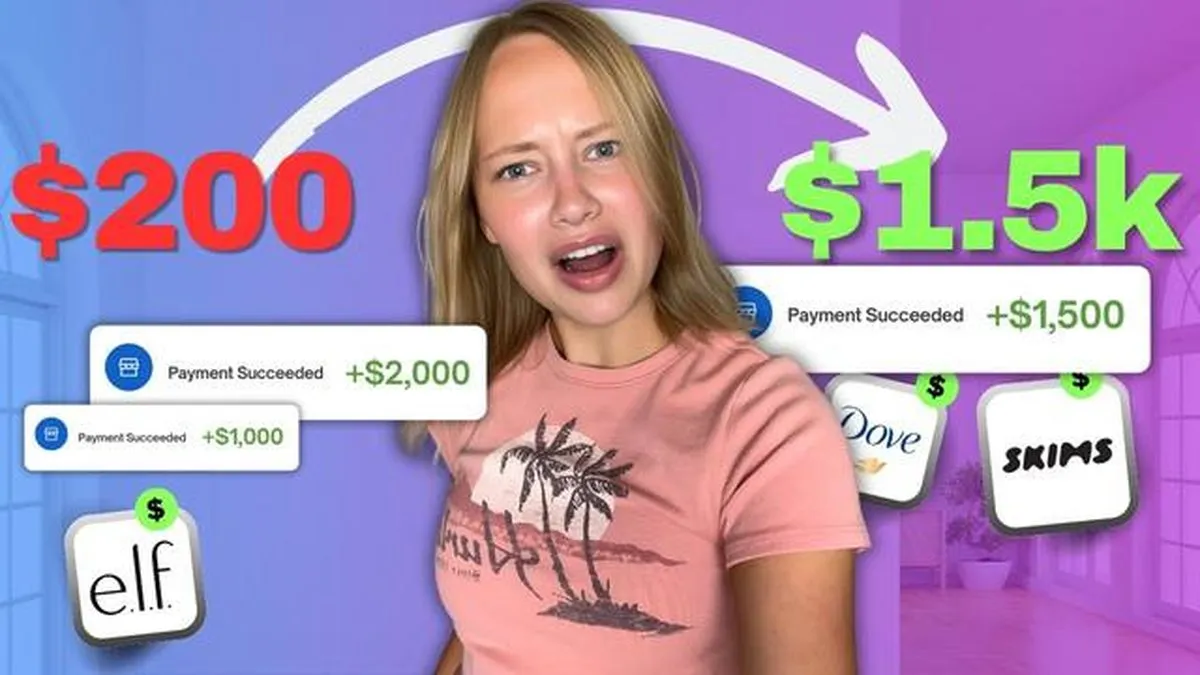
How I Turned $200 One-Offs Into a Monthly UGC Retainer
Key takeaways
- A UGC retainer is a monthly agreement where a brand pays you a set amount every month for an agreed batch of content, so you stop restarting from zero after every project.
- Gloria's one-off collabs got great feedback and no repeat work because she delivered the video and disappeared. The fix started with putting the brand's needs ahead of the check.
- Her retainer system has four touches: overdeliver slightly during the project, plant a seed at delivery, check performance a week after the video goes live, then send a strategic follow-up with fresh ideas.
- When a brand says yes to more, Gloria invites them to a strategy call instead of sending rates. When a brand says there is no budget, experienced creators can offer a small performance-based batch.
- Gloria lost a $3,000 per month retainer after she got comfortable and her quality slipped, and she had no contract in place. She now gives retainer clients her best work every time and puts deliverables, timelines and usage rights in writing.
I'd send a brand a finished video, feel good about it, and then hear nothing. No follow-up from the brand, just silence.
Most of my early deals were $200 one-offs. On paper it looked fine. I was landing brands, sending polished videos, getting paid and stacking portfolio work. Behind the scenes, every project was a reset: one client, one check, move on.
I was hustling hard, 12-hour days, burnt out, and low-key thinking about quitting. And the wild part, brands seemed happy. Great feedback, no complaints, but also no second collab.
Gloria, 0:02:03
Before UGC I worked at Walmart, living paycheck to paycheck. I thought UGC would free me from that feeling. Instead the question in my head changed from "when's the next paycheck coming in?" to "where's our next brand deal?"
i wasn't building a business. i was just replacing my walmart manager with 12 different brand managers.
Gloria, Skool post, 2025-10-29
The turn came from one question I finally asked myself.
That's when I asked myself, if they need UGC once, why wouldn't they need it again? And then it hit me. I was acting like a one-time freelancer, not a long-term partner. I was delivering the content and then disappearing.
Gloria, 0:02:03
That mindset shift turned my $200 one-offs into $1,500 monthly retainers. A huge following is optional for landing monthly clients. What matters is a system for turning a happy one-off client into a UGC retainer, and the messages I use are below.
Fair warning, this is a little more advanced. It's for creators already making somewhere between $500 and $2K a month from UGC.
What is a UGC retainer?
A UGC retainer is a monthly agreement where a brand pays you a set amount every month for an agreed batch of content. UGC (user generated content) is the short, natural video regular people film on their phones that brands pay for and run as ads or posts. A retainer turns that work into income you can plan around.
When I switched to retainers, I stopped pitching "$150 per video, just tell me what you need." I started pitching packages like these:
- $3,500 a month for 8 videos, 10 photos and 4 new content concepts
- $4,000 a month to handle all of a brand's TikTok content creation
- $2,500 a month for weekly UGC so their ad campaigns never run dry
Brands say yes to this because finding a new creator is a pain for them. Every new creator means more onboarding, more explaining the product, and more risk of getting content they can't use. Once you prove you understand their brand, keeping you is the easy choice.
I had one skincare brand pay me $3,200 a month for 6 straight months. Every month I delivered what they needed without them lifting a finger. If you are still figuring out what to quote per video, start with how I set my UGC rates and build packages from there.
Why do one-off UGC deals never turn into repeat work?
Most one-off deals stay one-off because the creator delivers the files and goes quiet. The brand was happy. You just never gave them a reason or a plan to keep going.
That was me. I treated each brand like a transaction: deliver the video, collect payment, start hunting again. The mindset shift that got me my first monthly retainers was simple to say and hard to live. I started putting the brand's needs before mine, and thinking about how to solve real problems for their business beyond the one video.
It is 10x easier to sell to a brand that already trusts you than to cold pitch a stranger. When we are desperate for the next deal, we forget the brands we just worked with. They are the warmest leads you will ever have.
Before you pitch a single new brand this week, write down every brand you have already delivered for. That list is where your first retainer is hiding.
Answer "Can I see your portfolio?" with a strategy call
The first change happens before the collab even starts. When a brand asks to see your portfolio, invite them to a short call about their content instead of sending a Canva site and a rate card.
Here is the reply I started sending:
Hey, Mrs. Brand, I'd love to walk you through a custom content strategy I think could really move the needle forward for your brand. Want to hop on a quick call to brainstorm? No pressure, not salesy, just value.
Gloria, 0:02:34
That message flipped the whole dynamic. I came across as a consultant and a problem solver who brought ideas, and the brand started treating me like one.
You don't need to overexplain what happens on the call. Say enough to show you have structure and strategy behind you. Book it with their marketing team, ask smart questions, and come with ideas for their product.
Overdeliver on the first project, on purpose
Overdelivering means handing the brand a little more than they ordered, on purpose, without asking for more money. Done right, it is the move that sets up the retainer conversation.
When I worked with one skincare brand, they ordered one video. On top of that video, I shot an extra organic clip of me using the product in my actual morning routine, plus raw footage and a few photos. Usage rights and upsells stayed off the table.
Every extra was free.
A few days later the brand emailed me. They loved the content and said they were coming back for more. That reply was my opening for a monthly package.
This is the law of reciprocity in action. When you give freely and with intention, people want to give back, and trust builds faster than any edit can manage. Small add-ons count too:
- Send the final video in multiple formats
- Include bonus b-roll
- Deliver early
- Add a personalized audit or a few custom content ideas
The point is showing that you care about their results. For the full handoff process, read how I deliver UGC so brands book me again.
How do you pitch a UGC retainer after the first project?
You pitch a UGC retainer after the first video is delivered and live, once the brand has seen your work perform. I use four touches, and each one gives the brand something useful before I ask for anything.
- During the project, overdeliver slightly, as covered above
- At delivery, plant a seed about future ideas
- One week after it goes live, check how the video is performing
- Two weeks to 30 days after delivery, send the strategic follow-up with fresh ideas
Here is how I word the seed at delivery:
this was fun to create. i have some ideas for your spring campaign if you want to hear them.
Gloria, Skool post, 2025-10-29
And the performance check a week after the video goes live:
hey, saw the video went live. how's it performing? i'd love to know what metrics you're tracking.
Gloria, Skool post, 2025-10-29
Two weeks after delivery, I send this:
Hey Mrs. Brand, if the content performed well on your end, I'd love to build a monthly package to keep that momentum going. I got a few fresh ideas that I think would absolutely crush for your campaigns.
Gloria, 0:04:36
Then I spend about 5 minutes typing out custom video themes or campaign ideas based on what I already know about their product. Suddenly I am bringing a plan to drive more sales along with my follow-up.
That single message landed me more monthly retainers than anything else I've ever done.
Gloria, 0:04:36
Another version I use lands 30 days after delivery and leads with competitor research:
i've been keeping an eye on your competitors and noticed they're doing xyz. i have a few concepts that could help you stand out. want to see a breakdown?
Gloria, Skool post, 2025-10-29
Whichever one you send, lead with their business, never your desperation.
Two mistakes kill this step. Some creators oversell right after the first collab and scare the brand off. Others go silent and hope the brand comes back on its own. Both keep you stuck.
When the brand bites, hold off on sending rates. Invite them to another quick strategy session and pitch the monthly package on that call, where you can show up as their go-to partner. For ideas on what to put inside the package, see how to build UGC packages and upsells.
What should you say when a brand says it has no budget?
When a brand says there is no budget for a monthly package, treat it as "not yet." Pivot to a small, low-risk starting point so they can say yes without a big commitment.
Here is what I send when I hear "we don't have the budget":
Totally understand. I'd hate for the reason you need UGC to be the thing that holds you back from getting it. I also offer performance-based options where we can scale only if the content drives results. I can start with a small batch and build from there.
Gloria, 0:05:07
That reply takes the pressure off and removes the risk for them. It also shows you think like a partner who wants the best for their business. If they have worked with you once, you are already in the door, and brands in that position would rather keep someone reliable than start over with a new creator.
Only offer performance-based options if you already know how to make conversion-driven content. If you are newer, skip it and stick to the overdelivery and follow-up messages above.
How I lost a $3,000 retainer by getting comfortable
Landing a retainer is half the job. Keeping it means delivering your best work every single month and putting the terms in writing from day one.
I learned this the expensive way, with a brand I loved. Great product, great team, everything was vibing. In a couple of months a single $500 project grew into a $3,000 per month retainer.
Their audience was engaging like crazy and the results spoke for themselves. Then I got comfortable.
My deliveries got a little slower, and my quality slipped a tiny bit. Because I was juggling too many other things, this brand got the B version of my work instead of the A version.
One day, the email came. "Hey Gloria, we've decided to go in a different direction."
Gloria, Skool post, 2026-03-05
The second mistake was the contract I never had. I didn't have one that protected the relationship or set clear expectations. Now I make everything clear upfront: what I deliver, the timelines and the usage rights, all in writing. Usage rights are the permission a brand gets to use your content, like running it as a paid ad, and for how long.
Because one lazy month can cost you a year's worth of income.
Gloria, Skool post, 2026-03-05
I took the lesson and moved on. Two weeks after that brand dropped me, I was negotiating with one of my dream brands and had a brand call booked for the next day. For more on staying the creator a brand keeps, read how to keep UGC clients.
How many retainer clients do you need?
Three was enough for me. I made $6,300 a month with just 3 brands, without mass pitching or spammy cold DMs.
I didn't need 50 brands to pay me once. I needed 3 brands to pay me every month.
Gloria, Skool post, 2025-05-21
Every one-off $200 deal buys you a few days of relief, and then you are back to square one next week. A retainer ends that cycle. The math I use to explain it: if Brand A pays $3,500 a month, Brand B pays $4,000 and Brand C pays $2,500, that adds up to $10,000 a month from three solid partnerships.
For me, the four-touch system turned inconsistent $2K months into stable $8K to $10K months with the same amount of work. Those are my own results with my own clients, and yours will depend on your niche, your skills and the brands you land.
Brands that love you also talk. Happy retainer clients start sending other brands your way, which is how you go from chasing brands to having them come to you. Here is how I get UGC referrals without begging.
To start, you need three things:
- Brands that need ongoing content
- A position as their partner, someone who solves problems with them
- A package that makes their life easier
When you solve problems, you get paid like a problem solver.
Disclaimer: The earnings in this post are Gloria's own results and are shared as her experience. They are not a promise or prediction of what any creator will earn. Results depend on your skills, effort, niche and the brands you work with.
Frequently asked questions
What is a UGC retainer?
A UGC retainer is a monthly package where a brand pays a creator a set fee every month for a set amount of content. Gloria's examples include $3,500 a month for 8 videos, 10 photos and 4 new content concepts, and $2,500 a month for weekly UGC so a brand's ad campaigns never run dry.
How do I ask a brand for a UGC retainer?
Gloria waits until two weeks after the first project is delivered, then sends a short message: if the content performed well on your end, I'd love to build a monthly package to keep that momentum going. She adds a few custom video ideas for their product. If the brand is interested, she books a strategy call and pitches the package there instead of sending a rate sheet.
When should I follow up with a brand after delivering UGC?
Gloria checks in about a week after the video goes live to ask how it is performing and which metrics the brand tracks. In her video she sends the monthly package message two weeks after delivery. In her written four-touch system, the strategic follow-up with competitor research lands 30 days later.
What if a brand says they don't have budget for a retainer?
Gloria replies that she would hate for the reason they need UGC to hold them back from getting it, and offers a small performance-based batch they can scale only if the content drives results. She says this option is only for experienced creators who know how to make conversion-driven content.
Do I need a contract for a UGC retainer?
Yes. Gloria lost a $3,000 per month retainer and had no contract that protected the relationship or set expectations. She now puts deliverables, timelines and usage rights in writing before the work starts.
About the author. Gloria Stonelake is co-founder of UGC World and Head of Creator Talent. She took home over $150K in one year from UGC, then built the agency brands pay to staff their campaigns with trained creators. Meet the UGC World team.
UGC World is a personal and business finance education and training company. Results described here are the experiences of the named creators and are not typical. Success depends on implementation and effort. We do not make claims about what you should expect to make.

