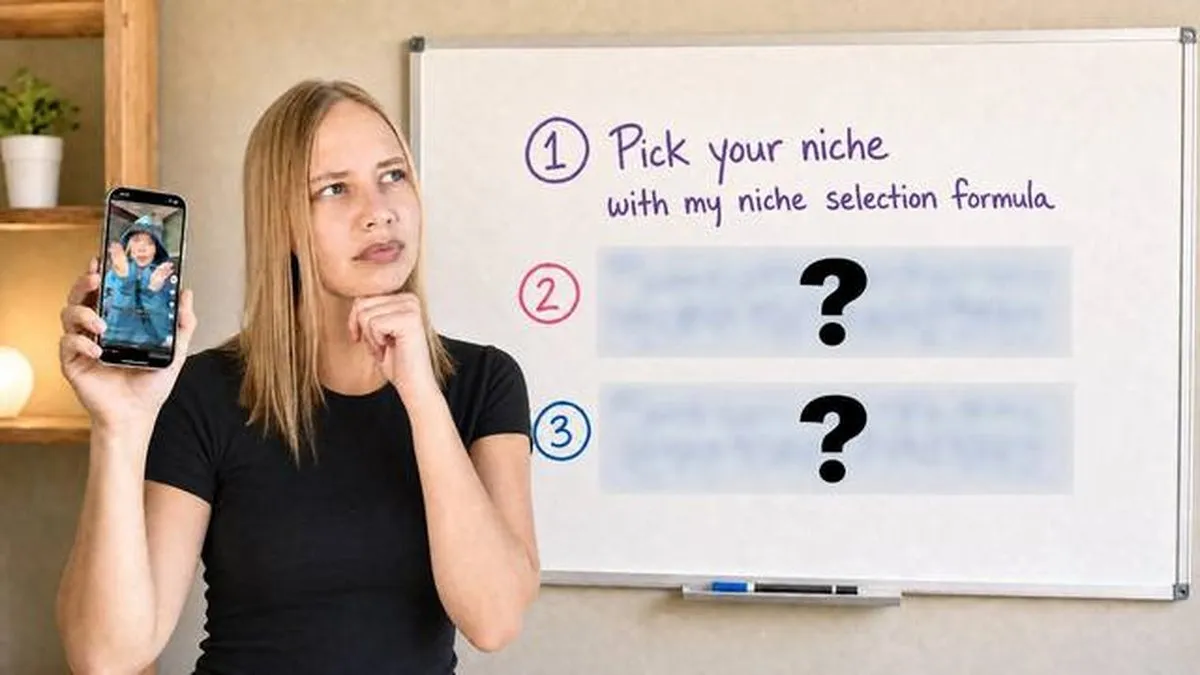
How I Would Start UGC Today With Zero Followers and No Experience
Key takeaways
- Start UGC in this order: pick 2 to 3 niches, build a one-page portfolio, film five practice videos, then pitch. Pitching before the portfolio exists gets you ghosted.
- Find your niches in the last 20 things you bought, the apps on your phone and what you talk about with friends for free. Brands can tell when you fake passion for a category.
- Five short talking-head videos, each opening on the product or the problem in the first two seconds, show a brand range without overwhelming them.
- Pitch brands already running UGC-style ads, reach the marketing or content manager, and lead with their product and a video idea instead of your own story.
- Getting paid inside the first 7 days is rare. Gloria's own first paid video earned $200, and her first months of following internet advice made her only $300.
Two years ago I was stocking shelves at Walmart at 6:00 in the morning for $14 an hour. Rent was fifteen hundred. My paycheck was two thousand. That left five hundred for everything else.
All of it started with a thirty-second scroll. A video of a girl my age, in a bedroom that looked like mine, saying she'd made real money that month on her phone. I had seen a hundred videos like it.
I'd felt the flicker of "must be nice" and scrolled past a hundred times, and filed the feeling under things other people get to do.
Gloria Stonelake, Skool post, 2026-07-31
This time a different sentence showed up. Three words: why not me. I stayed up that night figuring out how the thing worked, and I sent pitches the next morning, badly.
Then I followed all the UGC advice on the internet. Most of it slowed me down, and it took me months and months of grinding to make $300.
My first real paid video was for a product already sitting in my kitchen. I wore an oversized blazer from the back of my closet and used a cheap mic from the dollar store. That video paid me $200, and the brand came back for more content. Since then I've made six figures from my phone, including over $150K in one year, working with brands like Adobe and Perplexity.
If I had to start over today with zero followers, no experience and no big connections, I would do five steps in this order.
How do you start UGC with no experience?
You start UGC with no experience by doing five things in order: pick 2 to 3 niches, build a one-page portfolio, film five practice videos, pitch brands that already pay for UGC, then turn happy clients into monthly work.
UGC means user generated content: short, raw videos a regular person films on a phone about a product, which a brand pays for and runs as an ad or posts on its own pages. If the term is new, my plain definition of UGC with real examples covers it in full.
Most beginners jump straight to pitching, and brands ghost a creator who has nothing to send when they reply "show me your work." Everything in the first three steps costs $0 and takes less than a week, so start step one tonight.
Pick 2 to 3 niches from what you already buy
A niche is the category of products you make videos about, and yours should come from your real life. Write down 2 to 3 categories where you already spend money and time.
The biggest mistake I see is copying whatever niche looks popular. A beginner watches creators do skincare UGC, goes into the bathroom, grabs every bottle and films skincare. If you aren't passionate about skincare, brands see it from a mile away, and so will their audience.
I give every creator I work with the same exercise:
- Look at the last 20 things you bought.
- Scroll the apps on your phone.
- Notice what you talk about with friends for free.
Someone who gets excited about AI apps should niche in AI. If you're a nurse, your lane is probably healthcare, wellness, supplements or scrub brands. Moms fit baby products, family apps, home goods and meal prep brands. College students tend to fit productivity apps, budgeting, fashion and tech accessories.
This matters when you pitch. "I already use this product every single day" is worth more than any fancy portfolio. My kitchen product was already mine before I made a single video for it, and the brand felt that energy.
Write your 2 to 3 niches on paper today, before you open any app.
What should a beginner UGC portfolio include?
A beginner UGC portfolio needs three sections on one page: who you are with your contact details, your content examples, and a short about-me. Build it today in a free Canva account, in under an hour.
Think of your portfolio as a creative resume, a simple one-page website a brand opens when they want to see your work. Most new creators spend their first month getting ready for it, watching tutorials and buying equipment, and never build it.
Use this layout:
-
Top: your bio, your contact information and a one-liner about you and what you bring.
-
Section two: your content. With zero brand videos yet, film three practice videos with products you already own, 30 seconds each, talking head, you explaining why you like the product.
-
Section three: about me. Where you're from, your interests, your niche and your email.
Keep it very simple. Your portfolio needs to exist so you have something to send the moment a brand asks. You'll make it prettier over time.
My older 7-day plan also had you set up a UGC handle first (mine is my first name plus UGC), with a matching Gmail and new Instagram, TikTok and X accounts if you want UGC off your personal pages.
I remember a line from Tony Robbins: "Perfectionism is the lowest standard on the earth, because it's not real." Ship the portfolio fast and improve it later. For the full build, read how I would build a UGC portfolio with no experience.
Film five practice videos before you pitch anyone
Film five UGC videos before you reach out to a single brand. Five is the magic number because it shows range without overwhelming the company.
A brand who clicks your portfolio and sees one video thinks "beginner," click, trash. Five videos across different products in your niche tells them you're serious.
The framework I teach is simple: talking head, your phone and the product. Open with a hook, which is the first two seconds of the video that make someone keep watching. Start with the product or the problem. Skip "Hey guys" and "So I wanted to talk about," because, frankly, no one really cares.
I filmed an example with my own Beats earbuds:
I was struggling with my headphones. It was always hurting my ears and I didn't really know what to do about it until I found these Beats wireless earbuds.
Gloria Stonelake, 0:05:37
That's the whole hook. After it came 20 to 30 seconds of honest experience: the earbuds sit inside the ear, so they don't hurt the outside of it, and they don't shake loose on a workout like clunky headphones. Then a one-line call to action to close: "Go get them now."
The style is raw, unpolished, FaceTime energy, the "I just filmed this in my bedroom" look. Add captions and basic edits and the video is brand ready. That raw style outperforms the pretty stuff, and brands know it.
Use random products you own from real brands. I still keep one or two videos in my portfolio for brands I never worked with. Before you call any video done, rewatch it start to finish for spelling mistakes or shots to redo.
Film one video a day this week and upload each to your portfolio. By Friday you're ahead of almost everyone still watching tutorials. My step-by-step on how to film UGC videos on your phone goes deeper on setup and shots.
How do you pitch brands for UGC as a beginner?
Pitch brands that already run UGC-style ads, send the message to the person who hires creators, and open with their product and a video idea. Do five of these a day.
When I started, I did what most creators do: 200 cold DMs that said some version of "Hey, I love your product and I want to create content for you." That message gets ignored and ghosted every single time, because every other creator on the internet sends it.
What works instead takes three steps:
-
Find brands already buying UGC. Search hashtags in your niche on TikTok and Instagram and look for ads with regular people talking to camera. Those brands already believe in UGC.
-
Reach the right person. Skip the brand's main account. Look up the marketing manager or content manager on LinkedIn, or find an email on the brand's website.
-
Lead with them. I call it brand-centered. Talk about their product first and yourself second.
If I were pitching Beats, I'd send this:
Hey Beats by Dre, I noticed that you're running UGC ads for your wireless in-ear earbuds and I actually use these earbuds every single day at the gym because my headphones kept falling off of my ears. And I put together a quick concept for a video that I think would really, really perform well for you. Here's my portfolio, insert link, would love to chat about creating content for you and your next campaign to knock it out of the water.
Gloria Stonelake, 0:08:42
The brand reads that and sees someone who did the homework, already uses the product and showed up with an idea instead of a request.
On volume, my numbers have changed. In 2024 I told people to send at least 25 emails a day, ideally 50. My 2026 plan is five researched pitches a day, 25 a week, each one written for that brand.
Either way, you send them every day, on a schedule. How to pitch brands for UGC walks through the first email in detail. Your second deal comes faster than the first, because now you have proof: a testimonial, a review and a real portfolio piece.
What to do in your first week as a UGC creator, day by day
Your first week as a UGC creator is a setup week. The plan below comes from my 7-day video, with outreach moved after the portfolio and the videos, the order my 2026 plan uses.
Block 2 to 4 hours a day for UGC in Google Calendar, and plan each day the night before or that morning. If you have a job or school, this step decides whether the week happens.
-
Organize. Choose your niches, create your UGC handle and Gmail, and set up Google Calendar with that email.
-
Portfolio. Build the one-page Canva portfolio with your bio, contact details, socials, a few clean photos and your first practice videos.
-
Research and filming. Study hooks, video bodies and calls to action, then film one video a day from here on. My own one-a-day goal lasted five days, and those five videos are still up.
-
Outreach. List brands running UGC ads, find the right contact and send your first pitches.
-
Pricing. Set your prices before a brand asks.
-
Delivery. Learn what a brief is and how to hand over files.
-
Mindset. Decide you're a business owner now, and repeat the process.
On pricing, do not charge $50 a video. Count the full time from the first email to uploading the final file, which for me runs 2 to 4 hours per project, and $50 for two hours pays about what a McDonald's worker earns. If you do take a lower rate, say plainly it's a one-time test drive for a longer partnership and ask for a testimonial or case study in return.
On delivery, a brief is the brand's directions for the video: information about the company and how they want it structured. Most brands want content within 3 to 14 days of you getting the product. Wear clothes with no other brand's logos, then upload to Google Drive and email the links.
Can you get paid for UGC in your first 7 days?
Yes, and it's rare. I said it plainly when I made my 7-day video.
I do want to tell you that getting paid within the first 7 days is rare for most people because it takes a steel will and 100% commitment to building a UGC business.
Gloria Stonelake, 0:00:00
The goal of week one is to become a creator who is ready to get paid: a niche, a handle, a calendar, a portfolio, five videos and pitches going out. Those first months of mine, the ones that made $300, went slowly because I followed advice that held me back.
The hardest part is to keep going when the nasty thoughts start telling you maybe this isn't for you. Keep following the plan on your calendar anyway.
How to turn your first UGC client into a monthly retainer
Ask for a retainer right after you deliver a project the brand is happy with. A retainer is a deal where the same brand pays you every month for a set number of videos.
One-off gigs put you back at square one, pitching again, after every video. Send this the day the brand tells you the content went well:
Hey Mrs. Brand, so glad the content performed well. I'd love to keep creating content for you on a monthly basis. I can do $1,000 for five videos every single month this way, so you have consistent content coming in without having to search for new creators every single time. How does that sound?
Gloria Stonelake, 0:10:13
Brands want consistency and hate hunting for new creators every month. Deliver good work on time, offer to make their life easier, and you give them an easy yes. Retainers are the step that changed everything for me. I went from $200 one-off gigs to $14,000 in a single month once I started stacking them, and with retainers you wake up knowing exactly how much money is coming in that month.
Why not you?
Everything I have came from swapping two words. "Must be nice" became "why not me," and I couldn't un-think it. There was no dramatic scene. It happened on an ordinary night, in a sentence only I heard.
You've felt that flicker too, scrolling past someone who made it work. Maybe yours sounds like "I'm too old" or "I'm too late," and if it's the age one, I wrote about whether you're too old for UGC.
so. why not you. actually answer it.
Gloria Stonelake, Skool post, 2026-07-31
Your first move is small. Write your 2 to 3 niches on paper tonight.
A note on results: the dollar figures in this post are my own, from my own work. They describe what happened to me and are no promise of what you will earn. Your results depend on your niche, your effort and the brands you pitch.
Frequently asked questions
How do I start UGC with no experience?
Pick 2 to 3 niches you already live in, build a simple one-page portfolio in Canva, and film three to five practice videos with products you own. Then pitch brands that are already running UGC-style ads, five a day, with a message about their product and a video idea.
Do I need expensive equipment to start UGC?
No. Gloria filmed her first paid video on her phone in an oversized blazer from the back of her closet with a cheap mic from the dollar store, and it paid $200. Raw, honest videos filmed in a bedroom are the style brands buy for UGC.
How many videos should a beginner UGC portfolio have?
Gloria's number is five. One video tells a brand you just started, while five across different products in your niche shows range without overwhelming them. You can launch the portfolio today with three practice videos and add the rest that week.
How many brands should I pitch a day as a new UGC creator?
Gloria's 2026 plan is five researched pitches a day, 25 a week, each naming the brand's product and a video concept. In her older 7-day plan she pushed volume harder, at least 25 emails a day and ideally 50, with 10 a day as the number to avoid.
Can you get paid for UGC in your first week?
It happens, and it is rare. Gloria says getting paid in the first 7 days takes a steel will and full commitment. Treat week one as the setup week: niche, handle, calendar, portfolio, videos and your first pitches.
About the author. Gloria Stonelake is co-founder of UGC World and Head of Creator Talent. She took home over $150K in one year from UGC, then built the agency brands pay to staff their campaigns with trained creators. Meet the UGC World team.
UGC World is a personal and business finance education and training company. Results described here are the experiences of the named creators and are not typical. Success depends on implementation and effort. We do not make claims about what you should expect to make.

