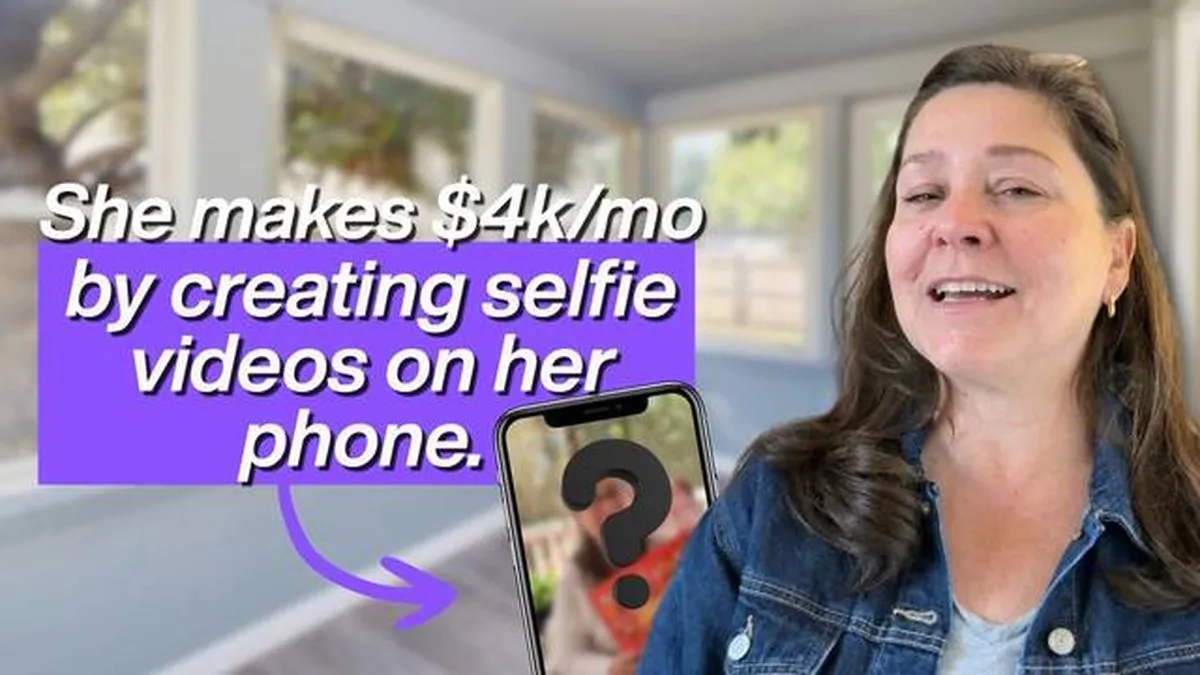
Am I Too Old for UGC? Karen Started After 35 Years in Finance
Key takeaways
- Age works in your favor in UGC when you pitch brands whose customers are your age. Karen Hanks put it simply: it's hard to buy a wrinkle cream from a 20-something.
- Service niches like insurance, roofing, tech and software have no product to ship, so you can film and deliver fast. Karen's biggest deal, $1,500 from a life insurance company, took her under three hours.
- Your own generation can be the niche. Kathy Freeman, a retired educator in Texas, pitched what boomers need, like hearing aids, and landed a hearing aid brand from her cold pitches.
- A big part of the learning curve is new vocabulary like hook, body and CTA. Karen Hanks said that every day it seemed like she had 10 new vocabulary words.
- Karen, Kathy and Anil all pitch every day, and Anil learned to keep prospecting after his first gigs landed. His first rejected video came from skimming the brief.
Karen Hanks semi-retired one February after 35 years of finance and accounting in utilities. Then the questions started. Why aren't you going back? Go get a real job.
Retiring all the way was never the plan. She wanted to keep working, just far away from the corporate rat race, so she started digging into how people make money online and landed on UGC. That stands for user generated content: short videos regular people film on their phones, which brands pay for and run as their own ads.
Karen called herself a skeptic, a numbers and logic person. If you've ever typed "am I too old for UGC" into a search bar, she is who I want you to meet.
You know, I I put my foot down and said, I am doing this. I'm not going back into the office.
Karen Hanks, 0:05:39
Before UGC, Karen had no TikTok account and had never posted on social media. Photos were her thing, never video. In April she said yes to UGC, then sat in analysis paralysis and perfectionism until August, when her first paid job finally came in.
When I asked Karen what kept her going through those months, her answer was one bill.
I needed health insurance and this was for my health insurance.
Karen Hanks, 0:30:21
By the time we sat down to talk, she had worked with about 50 brands in nine months and put a good month in the $3,000 to $4,000 range. Her biggest single deal was $1,500 from a life insurance company, and she turned it around in under three hours.
Am I too old for UGC?
No. The creators in this post started UGC at 49, at 51 and in retirement after 40 years in education, and several of them found their age was the reason a brand said yes. Karen put it this way.
It's hard to buy a skin care cream for wrinkles from a 21, 20 something year old as compared to someone who actually has wrinkles.
Karen Hanks, 0:14:59
She also made a point about money. In her words, Gen X has the highest spending power, and Gen X women hold the decision making at home on where the money gets spent.
Jessy Williams, a 49-year-old creator from East Texas, heard the same thing straight from a brand.
you talk to our demographic. You know, you're who we're looking for. You're our target audience
Jessy Williams, 0:18:33
A marketing director at a financial services company once told me how frustrated she was. Every creator pitching her was a college kid talking about building wealth who had never paid rent. She needed someone who had bought a house and figured out retirement planning while juggling real life.
Another creator I worked with was sure her gray hair made her unemployable. It made her the right fit for a high-end supplement brand for women going through menopause, and they paid her more than most beauty creators make.
Put your age in your pitch on purpose. When Jessy asked me how much of her personal life to use, my answer was to keep it in the pitch. If you're reaching out to ADHD brands like fidget toy companies and you or your kids have ADHD, say so in the pitch.
What UGC niche should you pick if you're over 50?
Pick the industries younger creators skip, and look hard at service businesses where there is no product to wait for. Karen's best money came from exactly there.
Her first portfolio covered wellness, skincare and beauty. She found she was conflicted about supplements she wouldn't take herself, and her rule is simple: if she won't take it, she won't pitch it. So she built a second portfolio.
I found that it was easier to do a service-based. You didn't have to wait for a product.
Karen Hanks, 0:23:42
With no shipping, she can turn a gig around within 24 hours. Her list since then includes tech, a casket company, insurance, a DIY mold kit and a roofing company. The $1,500 deal came through Fiverr, where a life insurance company reached out to her. She negotiated the contract and delivered four hooks, one body and three CTAs.
A hook is the first few seconds that stop someone from scrolling, the body is the middle that makes the case, and a CTA (call to action) tells the viewer what to do next.
The brand wanted the body filmed outdoors, in a very cold part of the country, and Karen says she froze her fingers off. Her read on why it paid so well: "Insurance has the budget."
Anil Gunjal took the same route with his work history. After 20 years in tech sales, he focused on SaaS (software sold online as a service) and tech. His view is that a buyer of business software relates to someone like him far more than to a 20-year-old. For Ship Forward, a container tracking tool, his angle is a real problem: lost track of a container, then instant tracking on the website.
Read why I'd pitch boring brands first in the highest paying UGC niches and how to choose a UGC niche from scratch.
How Kathy turned her own generation into a niche
Kathy Freeman lives in Texas and spent 40 years in education, 30 of them in special ed. She retired at 30 years, had to go back part-time, and wanted to make money online so she can quit that part-time job and help her elderly mom and her son. MLMs, resell courses, her own course and Amazon product reviews all came first, and none of it stuck.
I came into this telling myself, you won't be successful here because you've not been successful anywhere.
Kathy Freeman, 0:33:09
The turn came from one question: what do boomers need? Hearing aids and medical equipment topped her list, so she cold pitched a ton of brands like that. One was Ella Hear, an over-the-counter hearing aid brand. She had the hearing aids in during our interview, and she told me she had two videos with them at $300 each on the books early in the month we talked.
In her own town, she did a Valero gig with a local convenience store called Toot'n Totem, an on-site photo shoot.
A bunch of standing around, and then they took a few pictures, and then they sent me a check for over a thousand dollars. I'm like, okay, I could do that all day, you know.
Kathy Freeman, 0:29:32
Our interview went up in October 2026, and in it Kathy said she had contracted around $2,500 the previous month. Even her Instagram name, Boomer UGC by Kathy Freeman, carries the niche.
In June 2026 a mom of 3 in Nebraska asked me if she should lie about her background. My answer was to lead with it. Your past job is your portfolio.
The corporate guy who switched to UGC at 50 fits software and tech companies, and the ex-teacher fits school and tutoring apps. If that second one is you, read how a preschool teacher went full-time in UGC.
Write down what your life already hands you:
- The job you did longest, and the tools and software you used in it
- What your body needs at this stage (hearing, sleep, mature skin, menopause support)
- Your family stage: kids at home, kids leaving, aging parents
- The big changes you've lived through, like divorce, a career switch or a health scare
Why do brands keep rebooking older UGC creators?
Kathy's answer is excellence: doing your best work every time instead of settling for good enough. She credits it for the difference between her early gigs and the brands that keep coming back to her now.
Her first UGC jobs were low-paying gigs on Upwork for neurodivergence brands. When she shared them in our group, people pointed out what she'd done wrong, and she decided she wasn't cut out for it. What she lacked was the know-how, so she learned it.
if you want something to work you can't just do good enough. You've got to do your best.
Kathy Freeman, 0:21:12
The agency she works with started her at a low rate and has raised it as they trust her more.
Anil learned the same thing the hard way. He was rushing so fast between Bento and Fiverr that he skimmed briefs (the brand's written instructions for the video) and missed things in them. His first video for Rise Mushroom Coffee got rejected because he hadn't read the brief properly. Now he prints every brief out and reads it.
Read enough briefs and you'll see what Anil sees. He said nine out of 10 of his briefs ask for the same thing: make the video like you're talking to a friend on FaceTime, with no fancy edits or graphics.
Jessy's trap ran the other way. She got stuck re-tweaking and re-filming videos she thought weren't good enough. What finally broke it was watching her imperfect videos outperform the ones she redid a hundred times.
a lot of times the unperfect unpolished is what resonates more and will go, you know, do better for the brand.
Jessy Williams, 0:20:36
Hit everything the brand asked for, then let it be human.
What if you've never posted on TikTok or Instagram?
You can still start, because most of what feels like "too old" is a pile of new words. Karen had no TikTok account when she began, and she named the problem exactly.
What's a hook? Oh my gosh, I didn't know what a hook was. Never mind a body and a CTA. And every day it seemed like I had 10 new vocabulary words.
Karen Hanks, 0:09:49
Jessy hears the same fear from people her age about TikTok and Instagram. Her answer is that it's not that hard to learn, and you pick it up quick.
Kathy thinks starting with no content background helps, because you don't have old habits to unlearn. Anil had posted raw videos about numerology for years and built 22,000 followers, and he still had to Google what UGC stood for.
Anil's fix for camera nerves is practice. Make the videos, post them in the community group and take the honest feedback. While you film, think about the person whose problem you're solving instead of how you look. If you're starting from zero, here's how I would start UGC with no experience.
Find a creator your age who already did it
Anil was a 51-year-old tech sales executive in New Jersey who had made President's Club. By 50 he was worn out from missing his kids' games and his daughter's ballet lessons. Bills were piling up, and he was sleeping three or four hours a night. One day his 14-year-old son walked into his bedroom.
Dad, have you heard of UGC? You can get paid for making videos.
Anil Gunjal, 0:04:42
His first reaction:
this probably works great for 20-year-olds who are female and no one's going to listen to an old guy, right?
Anil Gunjal, 0:05:15
What changed his mind was a long Reddit post by Coach Dave, a coach in our community who looked to be in his 50s. The post said plainly that UGC is a system you have to work, with no shortcut. Anil figured a guy his age had made it work, so he had a shot too.
Within two hours of Anil joining, Dave spent an hour and a half on a call walking him through exactly what he does. Later, Dave looked at Anil's portfolio, saw someone like himself, and sent it to a company he was already working with. That became Anil's first gig. About five weeks in, Anil counted roughly $1,000 between cash in his account, an open invoice and product.
Dave is 52 and, in his words, started UGC four years ago. In a July 2026 post he wrote the line I want every late starter to remember: "i said simple, not easy! theres a difference."
So go find your Dave: a creator your age who shows how they work. Ask questions, then copy the process. On that first call, Dave told Anil to replicate what he did, step by step.
How do you get UGC clients when you start later in life?
You do outreach every day, before anything else, and you keep doing it after the first gigs land.
Karen does her brand outreach DMs first thing in the morning because she doesn't like doing them, so they're out of the way. Filming happens about three days a week, with a paper plan every morning and a calendar. She also wrote one pitch template and uses a platform that sends it out for her.
Her own calendar shows why. After a vacation in October, November and December went dry, and January filled up again.
Anil uses Backstage as his main source of gigs. He also built his own CRM on his own domain, pulls contacts from Apollo and sends 20 to 50 emails a day with four follow-ups. His biggest lesson came from a mistake: he got two gigs and stopped prospecting. He learned to keep pitching, because brands take around 10 days to get back to you.
Kathy pitches every day. The week we talked, every new pitch email she sent was getting opened. Not every one was getting a reply yet, so her next move was to tweak the emails themselves.
Here's the routine in steps:
- Pitch first thing, before you film or edit anything
- Pick one or two places to find work instead of applying everywhere
- Send follow-ups on a schedule (Anil runs four after every first email)
- Keep pitching while paid jobs are on your plate, so next month doesn't go dry
From gifted collabs to paid campaigns at 49
Jessy Williams, 49, ran her own virtual assistant business for about four years before she started UGC in September. She wanted work that was creative and flexible enough for a family where everyone is neurodivergent, including her son with special needs.
Month one was slow: a few gifted collabs, where a brand sends free product instead of pay, plus a couple of small jobs that paid product plus a little extra. Things picked up when she got into campaigns that paid a base rate plus CPM. CPM means you get paid a set amount per 1,000 views your video gets, once it passes the brand's view threshold.
Several of her videos went pretty viral, the brand asked her onto another campaign, and she ended up on a couple of campaigns, one with a much higher base rate. Later, for a brand close to her heart, she combined a skit style that had already worked for her with her family's real experience with ADHD and autism, and that video broke virality for the brand.
She runs every campaign that way now. If the brand wants something specific, she delivers it. When the brief leaves room, she pairs a format that already worked for her with something true from her own life. December was her best month, at about $3,300, and on December 1 she stepped away from her VA business to do UGC full time.
Her message to people her age:
you're not too old. It's not too old to try something new.
Jessy Williams, 0:17:02
If you're sitting on free product right now, read why gifted collabs kept me unpaid.
The 35-year-old who thought she was too old
In August 2025 a woman messaged me convinced she was too old for UGC at 35. She saw young creators on TikTok and counted her wrinkles and the dances she didn't know.
Every creator in this post started older than 35, and every one of them landed paid work. A 35-year-old with kids knows school pickup stress and family budgeting in a way a 22-year-old doesn't, and brands selling to moms want someone who lives it.
Your so-called "disadvantages" aren't disadvantages at all. They're your positioning.
Gloria Stonelake, August 7, 2025
Find the brands looking for exactly what you are, and pitch them.
Frequently asked questions
Is it too late to start UGC at 50?
The creators in this post started at 49, at 51 and in retirement after a 40-year career in education. Anil Gunjal was 51 and had to Google what UGC stood for, then landed his first gig in his first week. Karen Hanks started after 35 years in finance and told us she had worked with about 50 brands within nine months.
Do brands actually want UGC creators over 40?
Yes, when the product is sold to people over 40. Jessy Williams, 49, said a brand told her she talks to their demographic and is their target audience. Karen Hanks pointed out that Gen X women hold a lot of the spending decisions at home.
What is the best UGC niche for older creators?
Start with what your age and work history already give you. Kathy asked what boomers need, pitched hearing aid and medical equipment brands, and has also done mature skincare. Anil used 20 years of tech sales to focus on SaaS and tech, and Karen moved into service businesses like insurance and roofing because there is no product to wait for.
Do I need to be on TikTok to start UGC?
No. Karen Hanks had never had a TikTok account or posted on social media before she started. In UGC the brand runs the video on its own ads and pages, so what you need is a portfolio of sample videos and a habit of pitching.
About the author. Gloria Stonelake is co-founder of UGC World and Head of Creator Talent. She took home over $150K in one year from UGC, then built the agency brands pay to staff their campaigns with trained creators. Meet the UGC World team.
UGC World is a personal and business finance education and training company. Results described here are the experiences of the named creators and are not typical. Success depends on implementation and effort. We do not make claims about what you should expect to make.

