A Brand Asked for My UGC Portfolio. What Do I Do Next?
Key takeaways
- When a brand asks for your UGC portfolio, check the email domain first. Paste it into Google to see if a real website opens, then ask an AI tool to research the brand and look for bad Trustpilot reviews.
- Reply with your portfolio link, a short 'let me know what you think' and one question: would you like to hop on a call? Gloria says she closed about three of every four brand calls and about half of deals handled over email.
- If the brand skips the call, ask which video on your portfolio they liked, so the video you deliver matches what they expect.
- When a brand asks your rate, offer a package of videos instead of one video, and put usage rights in the contract. Never start filming before the brand signs.
- Treat the first paid collab as the start of the relationship. Ask for feedback, ask how they found you and pitch your next concepts, because Gloria says about 90% of UGC business comes from referrals, word of mouth and repeat clients.
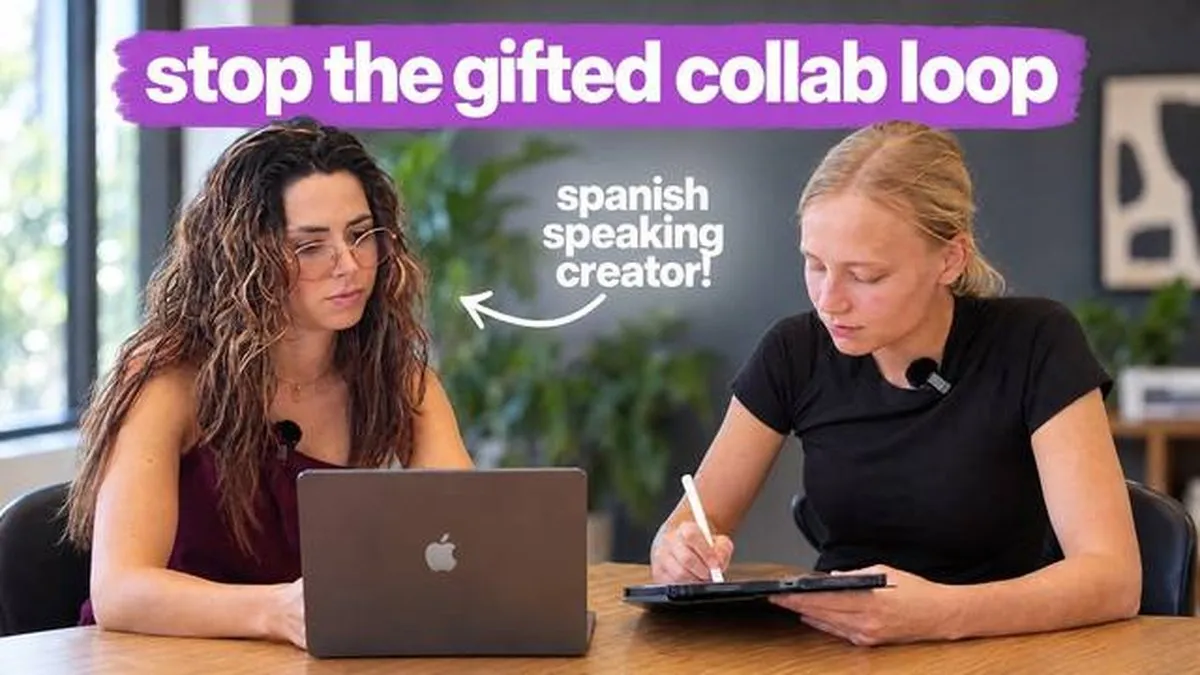
The message came in the same day Lorena sat down with me in my apartment in Miami. A brand had seen her profile, said they liked it and asked to see her portfolio.
It was the first time a brand had ever come to her. Her first reaction was fear.
But I was scared. Like, how was my first time that I received that message? I don't know if it is a spam or it is real.
Lorena, 0:48:14
Lorena had been doing UGC for two months. Before that she worked a regular nine to five. She tried Amazon reviews, that went badly, and then, scrolling Instagram and TikTok, she saw another girl doing UGC and thought, I can do that.
UGC means user-generated content: short videos you film on your phone that a brand posts on its own pages or runs as ads. Lorena had the content. She had been posting on and off since 2021, her lighting was good, her energy was good, and she speaks English and Spanish.
What she did not have was money. She had sent 47 pitches in two months and landed gifted collabs, meaning free product in exchange for videos, and zero paid deals.
Honestly, I was feeling like I need to make money, you know? So I was like so sad, but at the same time I said, well, this is my process.
Lorena, 0:02:11
We rewrote her pitch line by line and went through her portfolio and her Instagram. Then I walked her through what to do with that brand message, from the first reply to a signed contract.
A brand asked for my UGC portfolio. Is the message real?
When a brand asks for your UGC portfolio, check that the brand is real before you send anything. Scams are everywhere, and Lorena's first worry was that this message was spam.
Here is what I told Lorena to do:
- Look at the domain on the email, the part after the @ (for Nike that would be nike.com)
- Copy and paste that domain into Google and see if it opens a real website
- Go to Claude or ChatGPT and ask it to research the brand for you
- Look at the Trustpilot reviews
If the reviews are terrible, chances are you are dealing with a fake company. Even when the company is real, a brand with awful service is a brand you do not want your face associated with. I wrote a longer list of warning signs in UGC brand red flags and scams.
What should you send back when a brand says "send your portfolio"?
Send your portfolio link, a short note and one question. That is the whole reply.
A portfolio is the page with your best videos, your name, your niches and how to contact you. When the brand asks for it, keep the email small. I would write something like "let me know what you think," or "what ideas are you thinking of?" Then ask one question: would you like to hop on a call?
Ask for the call in every portfolio reply. Some brands will say yes, and others will say they do not have the time, which is totally fine. I put it at about a 50-50 chance.
Lorena had to learn one thing here. In her early pitches she dropped her portfolio link right away. I keep the portfolio out of the first email, because links can stop an email from landing in the inbox and because I want the brand to reply to me instead of getting lost in my videos.
So the portfolio request is the moment the link finally goes out. The brand asked for it, and now they are waiting.
Why should you ask a brand to hop on a call?
You close more deals on a call than over email. That is the reason, and I have the numbers from my own deals.
And for me, in the past, I've closed like three out of four. Every four brand calls, I would close three. So that's like 75% of all of the brands I had on a call. Versus over email, I closed just 50%, you know?
Gloria, 0:49:46
A brand call is a call where you and the brand talk through what they need. Bring energy to it. Tell them something like, "I feel the vision, I see the vision, I really want to grow with you." A brand that hears that thinks they have never seen a creator like you.
When I said that, Lorena jumped in.
Thanks God you told me that. I literally closed two campaigns on Sideshift because of that.
Lorena, 0:59:22
If you get the call, go in prepared. I break down what to ask in brand call questions for UGC.
What if the brand says no to a call?
If the brand says no to a call but is still interested, ask which video on your portfolio they liked. Then build their video the same way you built that one.
This is where most creators get stuck. They hear "interested," they get excited, they film a video, and the brand says it looks great but it is not what they wanted.
I compare it to the McDonald's drive-thru. You ask for a hamburger and they hand you a chicken sandwich. Other people are ordering the chicken sandwich and it is probably great. You still wanted a hamburger.
So I always ask the brand directly which video on my portfolio they liked. The beauty testimonial, or the product comparison?
Some brands do not have much experience working with creators, and they do not know what they want until you ask. Once they point at a video, you know what they like, and you can create theirs the same way you created that one.
Set the expectation before you film, every time.
How much should you charge when a brand asks your rate?
When a brand asks your rate, offer a package of videos instead of a price for one video. A package is a bundle, for example two videos or five videos, priced together.
Lorena had never been asked her rate. So I trained her on the email before it happened. It goes in three moves:
- Acknowledge the brand: tell them it is awesome and you are excited to work with their company
- Offer packages: for brands like theirs you offer packages, so they get more videos to work with and find a winner faster
- Anchor the price: name your normal rate per video, then show the package as the better deal for a first collab
The numbers I used with Lorena were random examples, two videos for $300 and five videos for around $900. Your numbers are yours to set. Keep the structure. Here is how the anchor sounded when I said it out loud:
And Mrs. Brand, for videos like this, I usually charge $300 a video, but I'm more than happy to give you a $300 two-video package just because it's our first time working together.
Gloria, 0:52:56
Never answer "what do you charge" with one price for one video. Tell a brand you charge $100 a video and they say great, one video please. Show a small package and a larger one instead, and the brand chooses between packages.
I called it price anchoring, the same thing a movie theater does when the large popcorn is only 50 cents more than the medium. The higher number makes the package feel like a good deal.
About 10% of the time a brand insists on one video. That is fine. Say okay, one video, sure. For more ways to build the bundle, read UGC packages and upsells.
Should you sign a contract before filming UGC?
Yes. Send the contract as soon as the brand confirms the package, and do not film anything until they sign it.
The contract lists the package, the fee and the usage rights. Usage rights are the permission a brand gets to use your video, including running it as an ad, and for how long.
In my first package I write that usage rights are included. If the brand needs more than 90 days, for example 180 days, that costs extra, and I gave Lorena around $150 as an example. I call usage rights a great way to make passive income in this industry.
Then the rule:
So usage rights, and then they sign the contract, and then never, ever, ever start creating the videos until you sign the contract.
Gloria, 0:55:43
A lot of creators get so excited about the yes that they start creating right away. Then something falls through, or the expectations were never set properly. Before you sign anything, go through the UGC contract terms to check.
How do you turn a first UGC collab into a repeat client?
Make the first deal go smoothly, over-deliver on it, then ask for feedback and pitch the next round. The first deal is the best cheat code I know for keeping a client.
I told Lorena about Cloud9 Clothing, a hoodie company. Their first deal with me was $600 for about 60 videos a month. That works out to $10 a video.
My videos did not perform at first. They sat at 200 views until month three.
What I did in that stretch was over-deliver. I hopped on brand calls with them, brought new ideas and put energy, time and strategy into making it work.
When we filmed this, I was coming up on my two year anniversary with Cloud9 the next month. That one brand paid me and my team six figures, and I made over $60,000 from them as a creator myself.
It doesn't end after the first collab. It starts after the first collab.
Gloria, 1:00:58
If I had celebrated the $600 and moved on, I never would have seen the rest. Here is what to do after you deliver:
- Request feedback: what did you like about my content, and how can I improve?
- Find out how they found you (if a brand found you on Instagram with a search tool, your keywords are working)
- Pitch the next round the same way you pitched the first, with a concept, why it works and what it does for them, like more downloads or more customers
Pitching is about 10% of the business. The other 90% is referrals, word of mouth and repeat clients. As a beginner, the 10% carries everything for your first one to three months. After that, the clients you treat well start sending you the next ones.
How do you get more brands to reply to your UGC pitch in the first place?
You get more replies when every line of the pitch is about the brand. Lorena sent 47 pitches in two months and none turned into paid work, and the pitch was a big part of the reason.
Her first sentence repeated what the brand sells back to the brand, and she introduced herself by name before saying what she can do for them. A brand does not care who you are until they understand what you can do for them. Plenty of creators also love bomb brands, with emails full of "I love your product." Brand owners I talk to say they hate it, because they suspect the creator has not even used the product.
Here is the three-paragraph structure we rewrote it into:
-
How you found them and what you do for them. Open with something like "I found you on social media and I was very inspired to reach out," followed by the fact that you create scroll-stopping, authentic content to help them drive a better ROI (return on investment).
-
One idea, why it works and what it does for the brand. For Lorena's dress brand, a real-life testimonial of her wearing the dress outside in a park, because their competitors are doing it and people want real-life content, so they land more customers.
-
Past brands and a question. Name brands you have worked with and ask if they would like to see some examples. The examples live in your portfolio, which they ask for in the reply.
Then volume. I set Lorena a goal of 30 pitches a day, minimum, across three or more platforms. She was on Bento, and I sent her to SideShift and Tribe too. The full first email is in how to pitch brands for UGC.
Checklist: what to do when a brand replies to your UGC pitch
Save this for the day it happens to you:
- Check the email domain, Google it and look up reviews
- Send your portfolio link with "let me know what you think"
- Ask if they would like to hop on a call
- If there is no call, ask which video on your portfolio they liked
- When they ask your rate, offer packages and anchor your price
- Send the contract with the fee and usage rights written in
- Film only after the brand signs
- Over-deliver, ask for feedback and pitch the next concepts
By the end of our session Lorena had an action list: two portfolios, one in English and one in Spanish, a bio with her niches in it, a structure for every video and 30 pitches a day. She told me she was ready for the next level. When the next brand asks for her portfolio, she knows what to send.
The results in this post are my own and Lorena's, shared as examples. They are not a promise of what you will earn. Your results depend on your work, your niche and the brands you pitch.
Frequently asked questions
What should I send when a brand asks for my UGC portfolio?
Send the portfolio link with a short line like 'let me know what you think,' then ask if they would like to hop on a call. Gloria puts the odds of a brand saying yes to a call at about 50-50. If they say no, ask which video on your portfolio they liked best.
How do I know if a brand asking for my portfolio is a scam?
Copy the part of their email address after the @ and paste it into Google to see if it opens a real website. Then ask Claude or ChatGPT to research the brand for you. Bad Trustpilot reviews are a sign to walk away, even if the brand is real, because your face ends up attached to it.
Should I quote a price for one UGC video?
Gloria's rule is to always offer a package and never a single video, so the brand chooses between a smaller and a larger package. She says about 10% of the time a brand insists on one video, and that is fine. The package gives the brand more videos to test so they find a winner faster.
Can I start filming once the brand says yes?
No. Send the contract first, with the package, the fee and the usage rights written in, and wait for the brand to sign it. Gloria says that when creators film before signing, something falls through or expectations are not set properly.
About the author. Gloria Stonelake is co-founder of UGC World and Head of Creator Talent. She took home over $150K in one year from UGC, then built the agency brands pay to staff their campaigns with trained creators. Meet the UGC World team.
UGC World is a personal and business finance education and training company. Results described here are the experiences of the named creators and are not typical. Success depends on implementation and effort. We do not make claims about what you should expect to make.

