The UGC Pitch Email Template Behind My $2,500 a Month Retainer
Key takeaways
- Gloria's UGC pitch email template is three paragraphs: where you found the brand and what you can do for them, one specific video idea with why it works, and a little credibility with an open question.
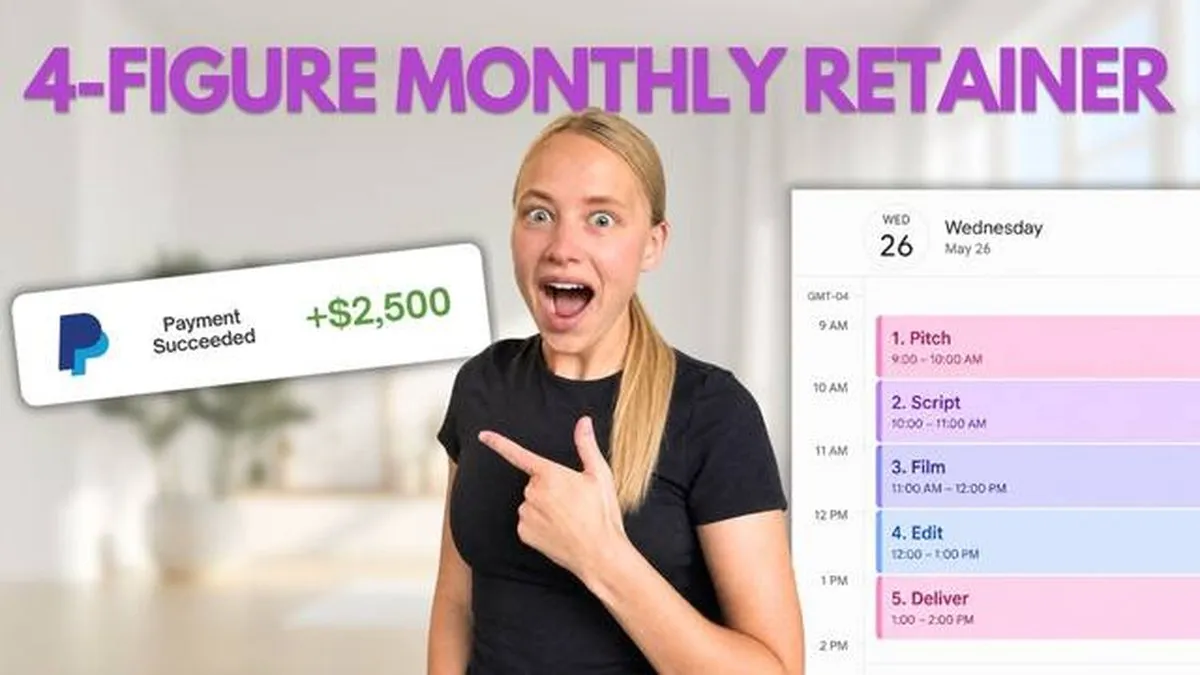
- Her pitch to AI Apply became a $450 paid collab first, then a $2,500 a month retainer once the brand trusted her work.
- The three-line version names something specific you noticed, says why it costs the brand money, and offers a free 30-second sample. Gloria got a reply to one in 41 minutes.
- Write the pitch in the brand's terms: sign-ups, downloads, lower customer costs and return on ad spend. Skip the love bombing.
- Leave out AI dashes, bold bullet points, long introductions and portfolio attachments in the first email. Send examples only after they ask.
AI Apply, an AI agent that helps everyday people apply for jobs, pays me $2,500 a month to make videos for their YouTube and their ads. It started with one cold email I sent in my third week on Bento, a pitching tool that pulled their marketing email for me.
I don't have that original email thread anymore. What I do have is the pitch: three paragraphs I had written for creator apps and software. Honestly, I didn't even tailor it much to a job app. I would make it more custom today.
That pitch became a $450 paid collab. I was so grateful for that one. AI Apply came back because I gave them amazing content, and the $450 deal turned into $2,500 a month.
In June I sent a different pitch. Three lines, to a brand whose last three ads all used stock photos. They replied in 41 minutes.
Below is my UGC pitch email template and the three-line version, with the reason behind every line, so you can copy the structure tonight.
What is a UGC pitch email template?
A UGC pitch email template is a short, reusable cold email you send to a brand that has never heard of you, offering to make videos for them. UGC means user generated content: short videos regular people film on their phones for brands to use in ads and on their pages. My template is three paragraphs, and I've used it for some of my biggest clients.
Most creators write pitches that are way too long. They introduce themselves, list every niche they have ever worked in, explain what UGC is and attach a portfolio, an Instagram link and sometimes a resume. By the end the brand is exhausted, and exhausted people do not reply.
We don't want to make it look like a college essay like some creators do and then it's three paragraphs, simple, straight to the point.
Gloria, Gloria UGC channel, 0:07:07
The three-paragraph UGC pitch email template I sent AI Apply
Here is the template, cleaned up from the one I sent AI Apply, with the subject line I teach with it. Swap the bracketed parts for your brand.
Subject line: proven content for [company name]
Hey [first name], I came across [company name] on social media and wanted to share a few UGC ideas to show how easy and useful your platform is for users. With more people looking for tools that make business simple and speed up their work, UGC is the quickest way to show real value, get more sign-ups and lower customer costs.
One idea is a short 30-second demo, a creator testimonial showing how fast someone can go from start to finish using your platform. It works because it combines real proof with a genuine voice. For [company name], that means more downloads, stronger retention and better returns on ad spend.
I've helped brands like yours with relatable, high-converting UGC. [Swap in a result or offer that is true for you.] I'd love to bring the same impact to [company name]. Would you like me to share a few examples?
Thank you, [your name]. If you don't want me to reach out again, just say so.
I write the subject line all lowercase on purpose. It's a pattern interrupt, it feels authentic, and it doesn't scream AI generated. That last opt-out line stays on every pitch I send, because I don't want a legal strike on my emails.
Why does the first paragraph say where you found them?
The first paragraph answers the question every brand asks when a stranger emails them: how did you get my contact? Saying "I came across you on social media" handles that before they can wonder about it. Then the second sentence tells them what is in it for them.
First of all, whenever you read an email, you're probably wondering, how did you find me? Right? Do you find me on an email list? Who told you about my contact?
Gloria, coaching call with Olivia, 0:45:23
Notice the words in that second sentence: sign-ups and lower customer costs. That is the language a tech company uses about its own business.
Pitching a tech brand, talk about sign-ups and downloads. With a skincare brand, the AI can swap in something like "more people looking for natural skin care products," and the rest stays the same.
Here is what I see instead in most pitches: "I love your product. I love your platform." It makes their eyes roll, because they see it every single day.
A lot of creators are love bombing these brands saying, "I love your product. I love your platform." But, they're like, "I know deep down you haven't even used it. You're just mass pitching these brands, right?"
Gloria, Gloria UGC channel, 0:03:32
Make every sentence in paragraph one about their business, in their words.
How do you write the video idea in a UGC pitch?
Give one idea, say why it works, then say what it means for the brand. That is the whole second paragraph.
For AI Apply I picked a 30-second demo because I know a lot of people don't sign up for AI apps and software. The tools look complicated before they jump in, and the first 30 seconds inside can feel like a lot. A demo that shows how fast someone gets from start to finish solves the exact pain the brand has. When you name that pain, the brand reads it and thinks, she gets me.
Then the payoff line: more downloads, stronger retention, better return on ad spend. That is where they get hooked, because now the email is about their numbers.
If you did research on their competitors, use it, but carefully. I told Olivia, a creator I coach, to be general about the competitor and specific about the problem. Saying "most of your competitors aren't doing this" shows you did your homework. Naming a competitor and trashing them can come off spammy.
What should you say in a pitch if you have no clients yet?
Keep the third paragraph short and say only what is true for you. I follow an 80/20 rule here: 80% of the email is what I can do for them, 20% is a little about me so they know I'm credible.
My own third paragraph mentions reaching millions of views for clients and a 2 to 4x ROI, a figure I use as the industry standard for UGC compared with traditional ads. If you are new, you can't say that yet, and that is fine.
If you've worked with a couple brands, mention those. If you haven't, don't mention you're a beginner, they don't care. All they want to see is in here is that you're committed.
Gloria, Gloria UGC channel, 0:05:36
Say what you can say. "I help tech brands like yours drive a better ROI with content" works. So does something unique to you, like offering unlimited revisions. If a line doesn't feel right to you, cut it.
Then end with an open question. "Let me know if you'd like to see examples" with a period at the end is a dead end. "Would you like me to share a few examples?" asks for a yes. I also like "Would you be opposed to seeing my portfolio?" because saying no to that question means yes.
The 3-line UGC pitch that got a reply in 41 minutes
The three-line pitch is the shortest version of the same idea: notice something specific, say why it costs them money, and offer to prove it for free. I've used a version of it for two years. Here it is word for word.
"Hi [name]. I noticed your last 3 ads use stock photography and I think your ads aren't making the money they should. I'd love to send you a 30-second sample of what your brand could look like as UGC. no obligation, just want to test. okay if I shoot one this week?"
Gloria, Skool post, 2026-06-22
The first line shows I actually looked at their account, so I'm not spamming everyone. Line two turns the conversation from "do you want to hire a creator?" into "I can help you fix a money problem you didn't know you had." Line three removes the risk, because I'm offering to prove I'm good before they pay anything.
It works on brands that don't know what UGC is, and on brands that already have a creator team. The reason is simple. A brand reading a cold email is only deciding one thing.
the brand isn't ready to evaluate any of that yet. they're ready to evaluate ONE thing. am I serious or am I noise?
Gloria, Skool post, 2026-06-22
My three-paragraph framework works the same way in Instagram DMs and on X. The words change a little and the structure stays. If DMs are where your brands live, read how to pitch brands on Instagram for a 60-second warm-up before you send one.
How I rewrote the template with Olivia
I kept the four core moves and swapped in the one thing that makes her different: comedy. Olivia is a 24-year-old comedian in Los Angeles who used to work a tech nine to five and now makes a lot of high-volume tech content. She wanted to add traditional deals with a bigger base pay per video and monthly retainers alongside her high-volume work, so I rewrote my template with her live.
Four moves stayed exactly the same:
-
Where you found them, so the brand knows she isn't a bot pulling emails off a list.
-
What's in it for them in their terms: funny, creator-led content as the quickest way to show real value, get more sign-ups and lower customer costs.
-
One idea, a short 60-second comedy skit with Olivia playing the person drowning in busy work, so the brand stands out in a feed full of screen recordings and boring demos.
-
An easy open question: "Would you like me to share a few examples?"
Her credibility line became "I've helped brands like yours with funny, high converting UGC," plus her tech background, so the brand knows she understands the product. That one word, funny, is her edge. Almost nobody makes comedy for tech companies, and they need more of it in their marketing.
Olivia already had her own touch in mind, a line like "let's be real, nobody wants to see a feed full of screen recordings." I do the same with mine. Take what the AI gives you and put your personality back in.
To do this yourself, paste my template into ChatGPT or Claude and tell it to change nothing except who you are targeting and your unique angle. Then go through it by hand and strip anything that sounds like an AI bot wrote it.
What to cut from your first UGC pitch email
Cut everything that makes the email look mass-produced or makes the brand work harder. The first email has one job, which is to get a reply.
There's no AI dashes. There's no bullet points or bolded or italic. It's just a text message. Like you texted them from your phone via email.
Gloria, coaching call with Olivia, 0:50:36
Before you hit send, check your pitch against this list:
-
Zero long dashes or other AI tells, since everyone hates AI generated stuff now.
-
Plain sentences like a text, with no bold, bullet points or italics.
-
Portfolio links and attachments stay out until they ask.
-
Leave your prices, past brands and testimonials for later.
-
Skip the "I love your product" love bombing.
-
Give one idea, with why it works and what it means for them.
-
End on an open question, plus an opt-out line.
Olivia asked whether sending at an odd hour, like 10:30 p.m., helps a pitch stand out. I don't think send times matter much. If the pitch is truly value dense, someone opens it and reads it whether it lands at 10 p.m. or 2 p.m.
For automating sends at scale, see how I set up UGC cold email that pitches brands while I sleep. A brand that doesn't answer the first time deserves a second email too, and these follow-up emails are what I send.
Why brands won't offer a retainer off your first pitch
Brands pay retainers once they trust you, and trust comes from the work you deliver after the pitch. A retainer is a monthly deal where a brand pays you a set amount for a set number of videos. The biggest mistake I see is creators expecting one up front. AI Apply paid me $450 first, and only after that did the $2,500 a month show up.
No, no, no, you have to gain the trust with the brand, and then they'll pay you retainer once they realize, "Hey, they actually like working with you."
Gloria, Gloria UGC channel, 0:02:00
Your pitch gets you the first collab. What you deliver gets you the second.
I treat every one-time collab like a long-term collab: do the research, do the work, show them what you've got. For AI Apply I researched their competitors, then scripted, filmed and edited every video. That month I started with five videos, they sent me ten more, and AI Apply paid me $1,300 through PayPal for the videos I was making.
For the full path from that first deal to a monthly one, read how I turn one-off deals into a monthly UGC retainer. Still deciding who to pitch at all? Start with how to pitch brands for UGC.
On Olivia's call I told her to keep her foot on the gas and pitch 30 to 100 brands a day. Put your version of the template in a doc tonight and start sending.
Gloria
The results in this post are my own and the creators I coach, described in their own words. They are not typical or promised, and what you get depends on your work, your niche and the brands you pitch.
Frequently asked questions
What should a UGC pitch email include?
Gloria uses three paragraphs. The first says where you found the brand and what UGC can do for them in their terms, like more sign-ups or lower customer costs. The second gives one specific video idea and why it works, and the third adds a little credibility and ends with an open question such as "Would you like me to share a few examples?"
Should I attach my portfolio to a UGC pitch email?
Gloria says no portfolio link unless the brand asks for it. In the first email the brand is only deciding whether you are serious. Once they reply and ask for examples, send the portfolio.
What do I say in a UGC pitch if I have never worked with a brand?
Do not announce that you are a beginner. Gloria's advice is to say what you can honestly say, such as the type of results you aim to drive or something unique you offer, like unlimited revisions. If a line does not feel true to you, leave it out.
What subject line should I use for a UGC pitch email?
Gloria uses "proven content for [company name]" written in all lowercase. She says the lowercase works as a pattern interrupt and does not read as AI generated, and that the simplest subject lines win.
Can I use ChatGPT to write my UGC pitch?
Yes, as long as you keep the three-paragraph structure and only change who you are targeting. Gloria tells creators to then make it their own and strip anything that looks like AI wrote it, including dashes, bullet points, bold and italics.
About the author. Gloria Stonelake is co-founder of UGC World and Head of Creator Talent. She took home over $150K in one year from UGC, then built the agency brands pay to staff their campaigns with trained creators. Meet the UGC World team.
UGC World is a personal and business finance education and training company. Results described here are the experiences of the named creators and are not typical. Success depends on implementation and effort. We do not make claims about what you should expect to make.

