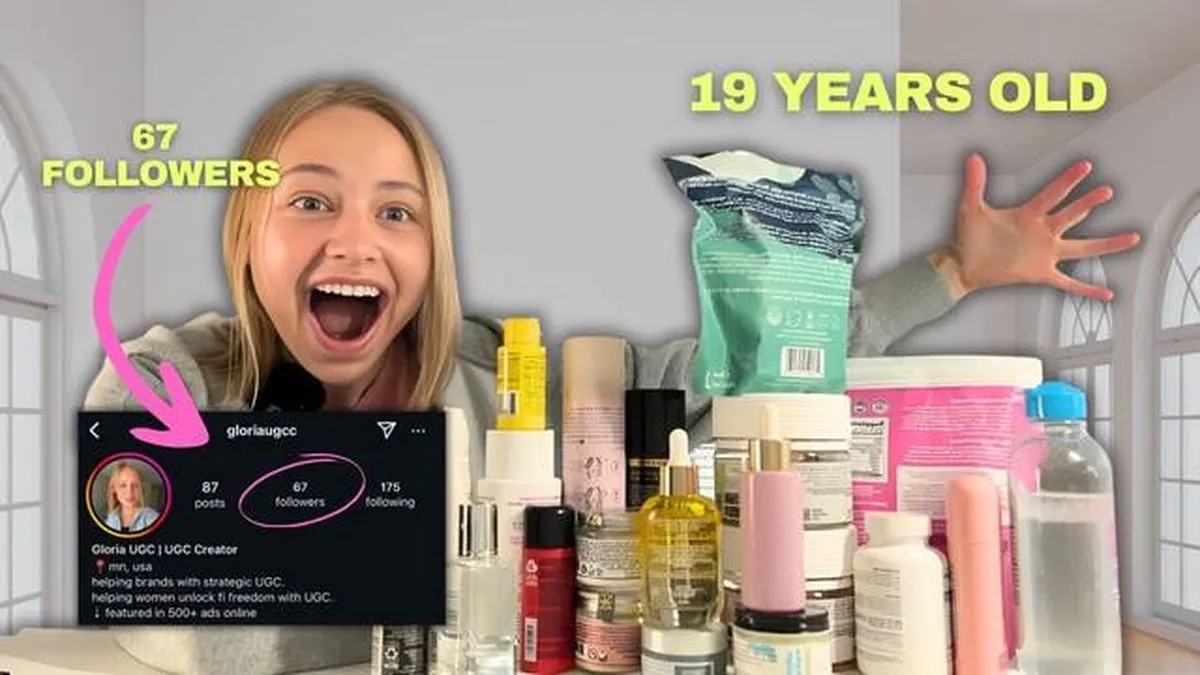
How I Pitch 500+ Brands a Day With UGC Cold Email
Key takeaways
- A UGC cold email system has two parts: a lead tool like My Lead Fox that finds brand emails by niche, and a sending tool like Lemlist that connects to your Gmail and sends personalized emails on a schedule.
- Before you launch a campaign, open a few random leads and check that every custom variable (brand name, product line) fills in correctly, and remove duplicates so no brand gets emailed twice.
- The first email exists to spark interest. Keep it short, mention one specific thing about the brand, add any proof you honestly have, and hold back the portfolio until they ask for it.
- Pitching is math. Gloria's own pipeline model runs from roughly 1,000 targeted emails to about 30 conversations, 15 qualified leads and 3 new clients.
- Test small before you scale. Maya spent about a month testing email versions before one template started pulling replies, which she described as a ripple effect.
I was 19, fresh out of high school, and I was recording my screen for a YouTube video. On my laptop was My Lead Fox, the tool I use to find brands. I had a couple of saved searches already: women's clothing, computer software, tech. That day I typed in beauty.
Shopify, WooCommerce and Wix all got a tick. I set the country to the United States and the language to English. Then I ticked one box that matters more than it looks: exclude blank emails. If a brand has no email, you cannot pitch it.
The leads went into a Google Sheet. From there, a CSV file went into Lemlist, the software that sends my emails. The import counter landed on 1,100 leads.
Nine of them were duplicates, so I left them out. Emailing a brand twice is how you end up on their blacklist.
Before I pressed launch, I clicked into random leads to see how my email read for each one. "Hey team Nail Supply." A brows and lashes brand called Polish Cosmetics. Every name sat where it was supposed to.
I set one email every two minutes, between 7am and 9pm, like a normal person sending email. Then I launched.
At that point I was making 5 to 15K profit a month from UGC, all thanks to that system. I was waking up to 5, 10, even 15 positive replies from brands a day.
Months later, a creator named Maya told us that finding and pitching one brand by hand used to take her 15 to 20 minutes. She set up the same two tools, tested emails for a month, and then the replies came all at once.
What is UGC cold email, and why does it beat pitching by hand?
UGC cold email means emailing brands that have never heard of you and asking to make user-generated content for them. User-generated content is short, real-person video that brands run as ads and post on their pages. Doing it with a system means software sends personalized emails for you every day, so your pitching keeps going while you film, edit or sleep.
Pitching by hand caps you fast. When you are new, no brand knows you. You have no referral network and no personal brand yet, so volume has to carry you.
Maya felt that cap before she ever automated anything.
I was either finding the brand, I would pitch to them, and that would maybe take 15, 20 minutes of my time of my day. So imagining doing 20 brands, it was so much.
Maya, 0:25:42
After she built her email system, she went from about 20 pitches to 100 or 200 a day. Her highest month before that was maybe around $3K, she told us, all from manual pitching. After months of building her systems, she hit her first $10K month.
Which tools do you need to cold email brands for UGC?
You need two tools and one address. My Lead Fox finds the brands, Lemlist sends the emails, and a business address goes in your signature.
Lead sourcing happens in My Lead Fox. A lead is a brand's name, email and sometimes phone number. You search by category, platform and country, so you can pull skincare brands on Shopify or fitness brands on WooCommerce.
Lemlist connects to your Gmail and sends the emails for you. When I open my Gmail, I see the sent emails sitting there like I typed them, but the software sent them on autopilot. It also handles spacing between emails. When I made the video, Lemlist offered a 14-day free trial, so you can test it before you commit.
The business address is the piece most beginners skip. I use iPostal for an online business address. It shows brands where you are based and proves you are a real person. In my video I also told creators it is illegal to send cold emails without a business address, which is why I never send without one.
How I build a UGC lead list in My Lead Fox
Start with one niche per search. Pick the category, choose the platforms (I tick Shopify, WooCommerce and Wix, some of the biggest site hosting platforms in the world), set the country and language, and exclude blank emails.
On a beginner plan you get limited downloads. One page holds 100 leads, so downloading pages one and two gives you 200. That is plenty to start.
Export every download into one Google Sheet per niche. Keeping them in one place stops you from drowning in random files. It also makes the next step faster, because you download a CSV from there straight into Lemlist.
You will hit a lot of hello@, hi@ and info@ addresses. Send to them anyway. A lot of customer service teams forward the email to the marketing team, and the marketing team responds. Sometimes they give you a better address, and you forward your email there.
For a deeper walkthrough on choosing brands and finding the decision maker, read how to find brands for UGC and the right person to email.
How to set up a Lemlist campaign for UGC outreach
In Lemlist, create a new campaign. You fill out three things: the sequence, the lead list and the launch settings.
The sequence is the email itself. It has to be a template with custom values, so every brand sees its own name, its product and its niche. My emails are technically templated, but they read like I wrote each one by hand.
It sounds nice, it sounds great, it sounds like I personally typed it, but I didn't.
Gloria, 0:07:09
Put the brand name in the subject line too. It customizes the email even more.
Then import your CSV into the lead list. Here is my checklist before anything goes out:
- Match every custom variable in the file to the variable in the email, exactly, so "company name" lines up
- Leave duplicates out of the import so no brand gets the same email twice
- Open two or three random leads in the preview and read the email as that brand would
- Space the emails out (I use two minutes between each one)
- Pick a sending window (mine is 7am to 9pm)
- Save, then launch
Check your variables every single time. Sending "Hey {company name} team" to a brand you want to work with is embarrassing, and it tells them a robot wrote to them. The whole setup takes me about 30 minutes.
What should the first UGC cold email to a brand say?
The first email should spark interest and get a reply. Keep it short, show you looked at the brand, add honest proof, and end with a question.
The goal of the first email is to just spark interest, not close a deal. ... Don't drop your portfolio in the first email. Make them ask for it.
Gloria, 0:02:02 (How I Land Brand Collabs on Autopilot)
Holding back the portfolio creates curiosity. A wall of text with your whole life story creates overwhelm, and brands read emails the same way you do. Nobody wants a college essay in their inbox.
My template follows a simple order, top to bottom:
- Greet the team by brand name and say you have content ideas for their product line
- Name one thing you like about the brand, like its chic, natural look
- Add whatever proof you honestly have: brands you have worked with in a similar niche, how many ads you have been featured in, how many videos you have made, or a background in marketing
- Say you would love to bring that energy to their brand
- Ask one question: would you be open to hearing a few content ideas
Only use proof that is true. I wrote that I had been featured in 500+ ads because I had. If you have made a handful of videos, say exactly how many.
You do not need finished ideas before you send. If you are good at your job, you can spin up ideas in a few minutes once they reply and you spend time on their website.
Around a holiday, flip that and put the idea in the email. My Christmas template pitched a stocking stuffer idea for one part of the video and a gift unwrapping, Christmas tree idea for another, which makes the email feel even more custom.
Sign off with your full name and a title. Write UGC creator, or Spanish UGC creator, or content strategist if that is your background. Then add your best email and your business address.
Maya added one more layer. She writes to a brand's pain points, like low engagement or conversions, and offers to help with them. In her words, she wanted to sound authentic and chill, never stiff or robotic: "Hey, this is what I offer."
One warning on ChatGPT. It writes weak pitch emails from scratch. Use it to correct your grammar, smooth out a draft, or adapt your own template for a new niche like fitness. My rule is copy and make better.
For a full template you can copy and make better, read my UGC pitch email template.
Why pitching brands for UGC is a numbers game
Pitching is math. Once your tools and your pitch are working, the number of emails you send decides how many conversations you get.
I laid out my own pipeline math in a post for our community:
From about 1,000 strategically targeted emails, you'll generally see around a 3% response rate, giving you roughly 30 meaningful conversations. Of those, about half will qualify as genuine prospects with real need and budget.
Gloria, Skool post, 2025-07-18
That leaves about 15 qualified leads. In my model, about 20% of those close, which is 3 new clients a month from 1,000 emails. Your numbers will look different, and that is the point of tracking them. Once you know how many replies you get per 100 emails, you know how many emails your goal needs.
Most creators I've worked with send maybe 50 emails and wonder why they're not seeing consistent results.
Gloria, Skool post, 2025-07-18
My target is 50 emails a day by hand. With Lemlist running, 500 or more a day becomes the standard, which is 15,000 brand contacts a month. Maya got to the same place in her head before her numbers moved.
Okay, now it's just a number game, baby. We need to be inputting a lot. We need to be putting a lot more emails out there so that in return there's a lot more replies.
Maya, 0:35:53
She had to beat the fear of rejection first. Before her systems, she kept asking herself what happens if she pitches a brand and that brand says no. She pitches hotels in batches of about 50 now, and one hotel says yes.
If you are still working out a daily number, read how many brands to pitch a day for UGC.
Test small before you scale your UGC outreach
Volume alone fails. Send a small batch, read the results, change one thing, and only scale the version that gets replies.
Remember, volume is power, but zero multiplied by zero is still zero.
Gloria, 0:03:03 (How I Land Brand Collabs on Autopilot)
Track how many brands open your emails. Test your subject lines. Tune the pitch for each niche, because a skincare brand and a software company care about different things.
Maya's first campaign landed flat. Responses came in slow at first, and she kept going.
So, that was me for, I swear to you, a month. Just testing and iterating different types of emails, messaging, because of course I wanted to sound like me as well.
Maya, 0:32:20
Then one version clicked.
And so then when I did hit my first template that was really good, I got so many responses. It was like a ripple effect.
Maya, 0:32:50
That month of testing is the part people skip. Plenty of creators send 50 emails and wonder why nothing consistent comes back. Maya kept rewriting until one template pulled replies, then scaled that one.
When brands open your emails and still stay quiet, the fix lives in the email body. I break that down in why brands aren't replying to your UGC pitch.
What happens after brands start replying to your cold emails?
Replies turn into conversations, conversations turn into clients, and good clients come back. You need a simple way to track every stage so nothing slips.
Maya uses Gmail labels to see where every conversation stands: in negotiation, interested, not interested, currently filming, completed. When a past client reaches back out, she sees the history and replies, "Hey, love working with you. Would love to do it again."
She also uses a tracker called Breakaway to see every project and client she has on the go. Notion came first, and she knew she would never update it, so pick the tool you will actually open.
The pipeline compounds. Maya told us her outbound emails grew her client list, those clients then recommended her to other brands, and a lot of them became regulars because the first video performed and they asked for another one the next month. One video she made for a big brand later earned her a $6K lifetime usage buyout after some back and forth with the brand.
Like an email can change your life, honestly.
Maya, 0:57:22
If you want to see how outreach fits into your first month of income, start with how I would make money with UGC in my first 30 days.
Your UGC cold email checklist for this week
Set this up once and it runs every day after.
- Pick one niche and pull 200 leads from My Lead Fox, with blank emails excluded
- Put them in one Google Sheet for that niche
- Get a business address for your signature
- Write a short first email with one specific detail, honest proof and one question, and leave the portfolio out
- Build the Lemlist campaign, match every variable and remove duplicates
- Preview three random leads, set two minutes between emails and a 7am to 9pm window, then launch
- Track opens and replies, change one thing at a time, and scale only the version that works
Earnings mentioned in this post are what Gloria and Maya said about their own results. They are not typical and they are not a promise of what you will make. Your results depend on your work, your niche and your market.
Frequently asked questions
What tools do I need to cold email brands for UGC?
Gloria uses two: My Lead Fox to pull brand names and emails by niche, platform and country, and Lemlist to send the emails from her connected Gmail on a schedule. She also uses a business address from iPostal in her email signature.
Should I attach my UGC portfolio to the first cold email?
Gloria says no. The first email is there to spark interest, so keep it short and let the brand ask for your portfolio. That small shift creates curiosity instead of overwhelm.
How many UGC cold emails should I send a day?
Gloria's target is 50 a day if you pitch by hand and 500 or more a day once Lemlist is running. Volume only works with testing, so track open rates, test subject lines and tune your pitch for each niche.
Is it okay to email info@ or hello@ addresses?
Yes. Gloria found that a lot of customer service inboxes forward the email to the marketing team, and the marketing team responds. Sometimes they give you a better email, and you forward your pitch there.
Can ChatGPT write my UGC cold emails?
Gloria's warning is that ChatGPT writes weak pitches from scratch. She uses it to correct grammar, smooth out a draft, or adapt one of her own templates to a new niche like fitness.
About the author. Gloria Stonelake is co-founder of UGC World and Head of Creator Talent. She took home over $150K in one year from UGC, then built the agency brands pay to staff their campaigns with trained creators. Meet the UGC World team.
UGC World is a personal and business finance education and training company. Results described here are the experiences of the named creators and are not typical. Success depends on implementation and effort. We do not make claims about what you should expect to make.

