Why I Stopped Taking Gifted Collabs in UGC (And When I Still Do)
Key takeaways
- Gloria's view is that brands who start a creator on gifted product tend to keep that creator on gifted, because a steady supply of free work gives them no reason to pay.
- One gifted collab Gloria described took about four working hours plus a day waiting on approval, for a $30 face serum the brand then ran as a paid ad.
- Gloria's rule: accept gifted work only when it is a brand you truly want in your portfolio and a clear path to a paid partnership is discussed upfront.
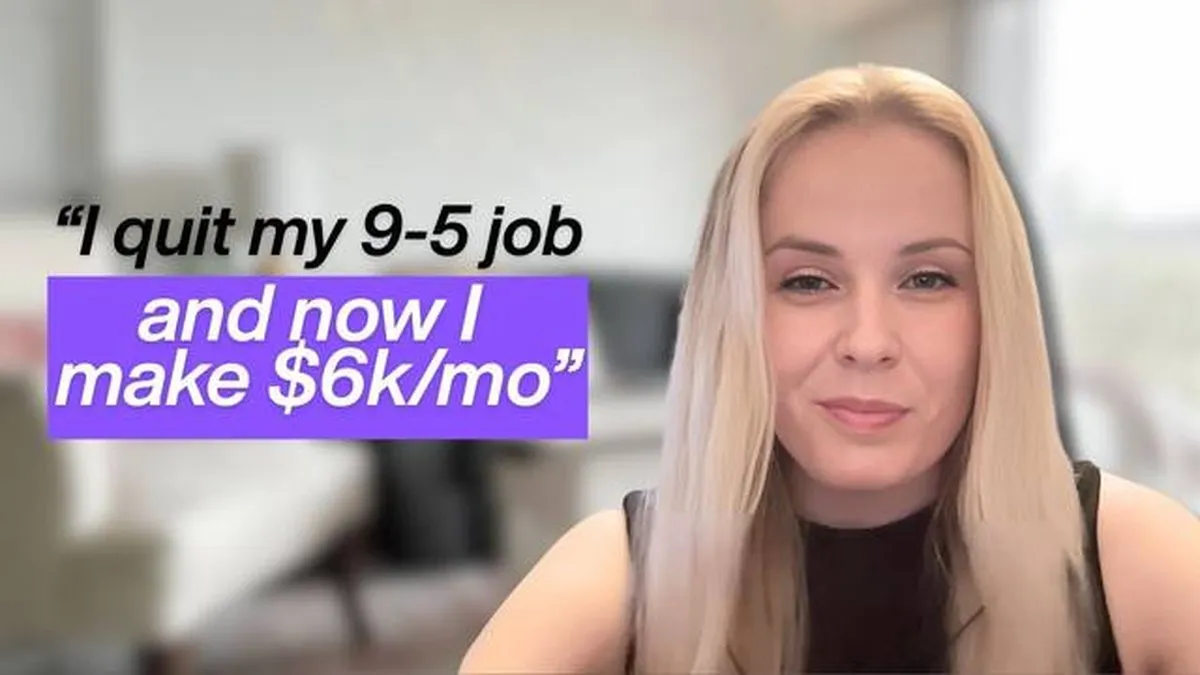
- Sasha broke her gifted loop by taking paid work only and rewriting her pitch around the brand's marketing goals, and she said she quit her full-time job about two months after getting serious.
- Rubie spent about six months on gifted work, starting with Amazon Creator Connections, and told us she then went from gifted to $600 collabs.
Sasha spent her weekends in Boston hopping from cafe to cafe with her boyfriend, filming for her Instagram. One video would show the best spots in her neighborhood. Another would tell you a random Korean restaurant was a hidden gem.
The pay was a comped meal or a free stay. She had been doing gifted collabs like that on and off since 2022, with a long break in the middle. Her day jobs had been admin work in higher education, law firms and medical offices. Even with that history, she wasn't sure UGC was a real business.
I don't know if this is legit. like I see everyone talking about it online, but is this really a thing or is this just kind of like another internet scam?
Sasha, 0:01:01
When she got serious in early 2025, she pitched brands she liked with a casual DM about how much she loved what they were doing. She was only getting $50 deals. For the first month or so she kept taking gifted collabs anyway, knowing it wasn't working.
Then she made one rule: paid work only. She rewrote her pitch around what each brand was trying to achieve, and about two months in she quit her full-time job.
I spent my own first year inside that same loop. Gifted collabs in UGC feel like progress. A brand said yes, a package showed up, and you have a new video for your portfolio. Meanwhile your rate with that brand gets set at zero.
What is a gifted collab in UGC?
A gifted collab is a deal where a brand sends you free product, or comps a meal or a stay, in exchange for content, with no fee. UGC means user-generated content: short videos you film on your phone that brands post on their pages or run as ads. If that term is new to you, start with what UGC is and how brands use it.
Sasha's early gifted work covered restaurants, cafes, supplements and some skincare. She called it unintentionally doing UGC, promoting things without recognizing what she was doing.
While you are doing the work, gifted feels exactly like paid. You still plan the video, film it, edit it and send it. Sasha said it plainly.
it's the same amount of labor and skill and time go into making a paid video versus a gifted video.
Sasha, 0:13:43
And when she was stuck in it:
It was like Groundhog Day. It was like I kept reliving the same thing over and over again.
Sasha, 0:15:16
Why brands that start you on gifted keep you on gifted
Brands that start you on free product tend to keep you there, because free product is how they run their content. I learned this the slow way. Here is what I wrote about my first year in December 2025:
Spent my first year accepting gifted products because I thought it would lead to paid work.
It almost never did.
Brands that start with gifted typically stay with gifted. It's a business model for them, not a trial period.
Gloria Stonelake, 2025-12-29
Look at it from the brand's side. They have a roster of creators willing to work for free product, and that pipeline keeps flowing. Paying you would only add a cost.
Every gifted collab I accepted trained the brand to see my work as worth a $30 serum. When I finally went back to those same brands to pitch paid work, they were confused. We had already agreed on my rate, and it was zero.
That positioning cost hurt more than the lost hours. Your early work sets the price brands expect from you later, so choose that first price on purpose.
How many hours does a gifted collab actually cost you?
One gifted collab I did cost me about four working hours and a full day of waiting, for a $30 product. In April 2026 I broke that serum down hour by hour:
The brand would send me a $30 face serum. I'd spend two hours scripting it, one hour filming, another hour editing, and a full day anxiously waiting for their approval. I delivered a polished 45-second video that they ran as a paid ad.
They made money. I got a bottle of serum.
Gloria Stonelake, 2026-04-05
Four working hours for a $30 bottle is $7.50 an hour, paid in serum, before you count the day spent refreshing your inbox. The brand then used my video to sell more of that serum.
Before you accept the next free package, run your own numbers:
- Add up your scripting, filming and editing hours.
- Divide the retail price of the product by those hours.
- Decide whether you would accept that hourly rate in cash.
- Ask whether the brand plans to run your video as an ad.
If the brand plans to run it as an ad, they already see your video as worth spending money on. Treat it as a paid job and quote it like one.
Are gifted collabs in UGC ever worth it?
Yes, in one narrow case. I accept gifted work only when the brand is one I truly want in my portfolio and a clear path to a paid partnership is discussed upfront. If either half is missing, my answer is no, said politely and firmly.
Sasha drew her line in a similar place. A few gifted collabs are fine at the very start, she said, while you have no portfolio yet.
I think it's fine at the beginning to take a few, especially if it's something you really want, if it's something that you think you can do a good job at, and you don't really have a portfolio, you're completely new to this, I think that's fine.
Sasha, 0:14:14
Past that point, she said, you have to respect your time as a creator and put it back into the parts of your business that make revenue.
Check every free offer against both halves of the rule:
- Would you be proud to show this brand on your portfolio page?
- Has the brand agreed to talk about paid work after this video?
Two yeses give you a deal with a next step. One yes means you are doing them a favor. For judging small cash offers, I wrote about when low paying UGC deals make sense.
I kept saying yes for an emotional reason too. Gifted collabs let me feel productive without ever having to ask for money. I called it portfolio building and relationship building. Really it was the path of least resistance.
A brand that says yes to free work has nothing to lose. The yes that tells you something about your value comes when you charge them.
What do you say when a brand offers only free product?
Thank them, tell them you work on a paid basis, and invite them to talk. Sasha said learning to send that reply was one of her biggest shifts, and this is how hers sounds:
Hey, like thank you so much. Like it seems like an amazing, you know, X, Y, and Z product, but like currently I work with brands on a paid collaboration basis to create strategic content to meet these kinds of goals. If you're interested, I'd love to chat with you.
Sasha, 0:27:33
After the reply she tosses over a few video ideas, so the brand can picture what paying her gets them.
The first few times feel scary. Sasha compared it to training a muscle.
It's like the more you do that, the stronger the muscle gets.
Sasha, 0:27:33
When you name your rate, give the reasons with it. Sasha said you can explain your services and what you offer instead of just saying "I charge $200, take it or leave it," and then it becomes a back and forth.
She also stopped answering the lowest offers. When a brand offers $10 for a review video, she skips the email.
I don't even like look at those emails anymore because it's just not worth it in my opinion to try to negotiate.
Sasha, 0:19:54
Expect a slow stretch after the switch. For two to three weeks after going paid only, Sasha was stuck at less than $100 per video, and she called it frustrating and discouraging. She pushed through by doing more outreach and applying only to paid gigs that fit her. For what to say when a brand comes back with a small number, read what to say when a brand has no budget for UGC.
How to pitch brands for paid UGC instead of gifted
Lead your pitch with the results you can get the brand. Early on, Sasha's DMs read like this:
Hey, like you know, I love what you're doing. I love what you're, you know, like showing people on your social media account. Like, I would love to help you promote X, Y, and Z.
Sasha, 0:08:08
From the brand's side, she said, that message raises one question.
Okay, like that's cool. Like, thank you for the support, but like why would I work with you?
Sasha, 0:27:02
So she overhauled the pitch. The new one opens with how she can help the brand reach its marketing goals, like more visibility or more signups, and what the two of them can build together. She positions herself as a business owner offering a set number of short videos per month.
Her targeting and volume changed too. A few years earlier she pitched about three brands a week on Instagram, picking whoever looked cool. Now she aims for at least 100 pitches a week and checks a few things first:
- Which niche the brand is in and whether it fits her.
- How many employees the brand has.
- Whether the brand is already running paid ads or UGC ads.
- Where to find it: Reddit, X, LinkedIn, Instagram, Fiverr, Upwork and the agency platform Sideshift.
Reddit was her easiest early source of paid work, because brands there post openly that they need UGC.
About a month and a half after getting serious, Sasha landed a three-figure monthly retainer, meaning a brand paying her every month for an agreed batch of videos. Together with her other deals, that put her over four figures a month. When we talked, she said her contracts locked in for September 2025 came to over $6K. I walk through how I would write that first outreach in how to pitch brands for UGC.
Is Amazon Creator Connections worth it for UGC?
Rubie said Amazon Creator Connections works, but it was never life-changing money for her. She is a 38-year-old mom in Las Vegas with a one-year-old son, and she works part-time as an aesthetic nurse. Creator Connections was where she started, and the system was simple.
Message the brand, get a gift and get a sample and then make a video off of it.
Rubie, 0:07:18
That earned her free product and a possible commission if someone bought. She was honest about where it left her.
Yeah, it works. It still does, but it's not like that life-changing money.
Rubie, 0:07:18
After a few months of Amazon and then TikTok Shop, Rubie had spent about six months in the gifted stage. Her husband is a truck driver who has to be gone, and she wanted to be home with her son. Free product wasn't getting her there.
What changed was saying no. Rubie now asks every brand what its budget is. If the number is too low for a video, she offers something smaller, like an Instagram photo static shout-out, or she turns it down.
I'd rather be playing with my baby than doing that, you know?
Rubie, 0:25:26
Some brands came back after she said no and asked to talk about paid ad videos. Here is how she summed up the change:
I went from gifted to like 600. Yeah. $600 collabs.
Rubie, 0:23:54
She still said yes when a local brand offered to do one for her in exchange for a reel, because it was building her portfolio. The difference is that the yes was a choice she made for a reason, and no longer her default.
Send one pitch with a real rate this week
The way out of gifted collabs is a pitch with a number in it. Pick a rate that feels like the floor of what your time is worth, like $300 for two videos or $500 for a package, and send it this week. Then see what happens.
If you are unsure where that floor sits, I explain how I set rates in how much to charge for UGC.
Sasha and Rubie both started where a lot of beginners start, saying yes to free product. What moved them was one decision to charge, then enough pitches to find the brands willing to pay.
The first paid yes changes everything after it.
Disclaimer: The results in this post are what Sasha, Rubie and I said about our own businesses. They are not a promise of what you will earn. Your results depend on your skills, your outreach and the brands you work with.
Frequently asked questions
Are gifted collabs worth it for UGC beginners?
Gloria accepts gifted work only when two things are true: the brand is one she truly wants in her portfolio, and a path to paid work is discussed upfront. Sasha said taking a few at the very beginning is fine when you have no portfolio yet, and that once you have some experience, that time is better invested back into the parts of your business that make revenue.
What is the difference between a gifted collab and paid UGC?
A gifted collab pays you in free product. Paid UGC pays you money for the video. Sasha pointed out that the same labor, skill and time go into both, so the only thing that changes is whether you get paid for those hours.
How do I turn down a gifted collab politely?
Thank the brand, say you work with brands on a paid collaboration basis, and invite them to talk if they are interested. Sasha used a reply like that and sent along a few video ideas, which keeps the door open for paid work.
Do gifted collabs lead to paid work later?
In Gloria's experience, almost never. She spent her first year accepting gifted products hoping they would turn into paid deals, and when she later pitched those same brands for paid work, they were confused because her rate with them had already been set at zero.
About the author. Gloria Stonelake is co-founder of UGC World and Head of Creator Talent. She took home over $150K in one year from UGC, then built the agency brands pay to staff their campaigns with trained creators. Meet the UGC World team.
UGC World is a personal and business finance education and training company. Results described here are the experiences of the named creators and are not typical. Success depends on implementation and effort. We do not make claims about what you should expect to make.

