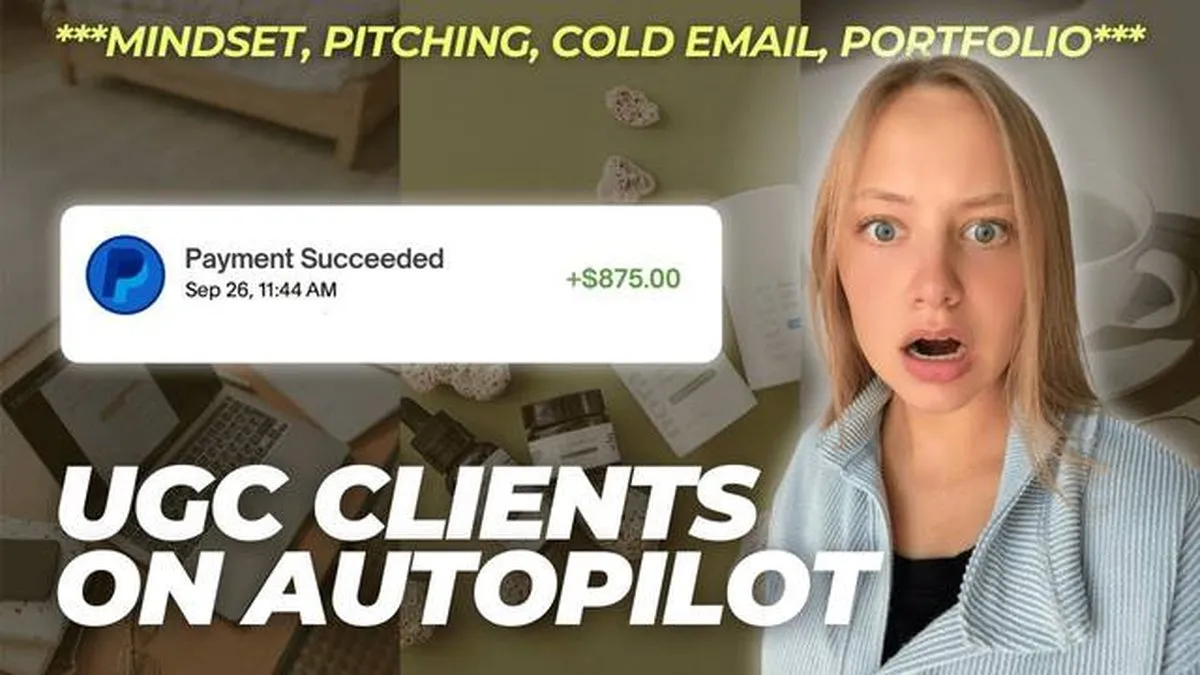
How to Get Your First UGC Brand Deal With No Clients or Audience
Key takeaways
- Your first paid UGC deal is the hardest one to land and the one that matters most, because it gives you proof, confidence and a real case study to talk about.
- You can build a starter portfolio from products already in your house, as long as the site is clean, uses consistent fonts and colors, and makes your email easy to find.
- Gloria aims for at least 100 outreaches a day and tracks every one in a spreadsheet, so she can see which pitches get positive replies.
- A strong first pitch opens with something specific about the brand, explains the problem your video solves, adds one or two video ideas and ends with a question.
- Nia refused gifted collabs, set up her pitching tools, and got a paid brief from an AI brand on her fourth day pitching: $600 for about 40 B-roll clips and two scripts.
At 18 I was stocking shelves at Walmart at 6 AM and wondering if this was my entire life. My paycheck was $2,000 a month and my rent was $1,500. I would sit on the floor of my empty apartment, with no money for furniture, and do the math on my phone calculator. Income minus expenses came out to negative $30 before anything unexpected happened.
I tried every business model I found. Dropshipping needed $2,000 to start and my bank account was negative. Trading took the $47 I had left after bills, and I lost it in a week. Affiliate marketing went nowhere with 600 followers from high school.
So I started going to free business networking events, because the paid ones cost money I did not have. That is where I met real business owners making real money. Then one of them asked me for something small.
Some random business owner asked me to film a 30-second video for his ads. Said yes. Had no idea what UGC was. Didn't even know that's what it was called.
Gloria, Skool post, 2025-11-26
My rate went from $100 a video to $200, then $500. I did the math again and I was making more per hour than I made in a week at Walmart. So I quit Walmart, went all in, and spent five months grinding alone through constant rejection.
If no brand knows your name yet, you are where I was. Here is how to get your first UGC brand deal from that spot: the four steps I teach beginners, and what Nia, a creator in our community, did when a brand answered her on her fourth day of pitching.
Why the first paid UGC deal matters more than any big month
Your first paid UGC deal is the hardest one to land and the most important one to get right. UGC means user-generated content: short videos real people film on their phones, which brands then use in ads and on their pages. The first time a brand pays you for one, you go from trying UGC to running a UGC business.
That one deal gives you proof, confidence and a case study. You have something real to talk about in every pitch after it. Brands see you differently, and you see yourself differently too.
Most beginners stay stuck because of the signals they send. They show up like fans, like influencers, or like someone begging for a shot. A brand can tell in one scroll if you are someone to pay or someone to ignore.
brands don't pay for aesthetics, they pay for outcomes.
Gloria, YouTube, 0:02:15
Everyone around you is chasing $5K months and dream collabs. Aim at the first yes instead.
How do you get your first UGC brand deal with no experience?
You get your first UGC brand deal by treating UGC as a business from day one, with a clear 30-day goal and daily habits that move you toward it. The moment you decide to become a UGC creator, you are technically a business owner. Act like one before anyone pays you.
Start by drawing a line between where your business is today and where you want it to be. If you are at $0 this month, pick a small target for the next 30 days. I use $1,000 as the example. The version of you at $1,000 thinks differently and takes different actions every day than the version of you at zero.
Then build the habits that person has. Set time aside every day to work on your portfolio. Practice editing so the first client gets quality videos. Send emails every single day, 20, 50, even 100, so your business starts to feel predictable.
Lock in and treat UGC like a job you report to, even before it pays you.
Nia put it this way. She saw two ways of doing UGC, the 99% way and the 1% way, and she picked the 1% way because, in her words, "it's treating this like it's a business cuz it is" (0:08:40).
What should go in your UGC portfolio before you pitch?
Your first UGC portfolio needs three things: a few of your best videos, a clean and easy-to-read site, and your socials and email linked where a brand cannot miss them. That is enough to start pitching. You do not need past clients to build it.
-
Videos. Put a few UGC videos on the site, filmed and edited as well as you can. With no brand work yet, script and film around random products in your house, like the pair of blue light glasses I used as an example.
-
A clean site. Use readable fonts, a few nice colors and a clear picture of yourself. My own portfolio uses a simple blue and pink wash with black and white fonts, the same on every page, so nothing distracts the person viewing it.
-
Easy contact. Link your socials and your email on the very first and very last page, so a brand can see your email and write to you in seconds.
If you do not want UGC videos on your personal accounts, make a separate UGC handle and use it on TikTok, Instagram and X. Then follow other creators and like their posts. The UGC community is friendly to people who are starting, and people start returning the support.
Your first videos will not be amazing. The more you make, the better they get. For a deeper walkthrough, read how I would build a UGC portfolio with no experience.
Position yourself around the problem you solve
The words on your portfolio, bio and pitch matter as much as the videos. If anything you write says "I make pretty content," you have already lost the brand's attention. Build your positioning around one question: what kind of content do I create that solves a problem for a brand?
Here is the line I use as an example. DTC means direct-to-consumer, brands that sell straight to you online.
I create UGC that increases conversion rates plus engagement for DTC skincare brands
Gloria, YouTube, 0:02:35
And here is the version that sounds like every other beginner:
Hi, I'm a cute UGC creator that loves storytelling and creating wonderful content.
Gloria, YouTube, 0:02:45
One line sounds like a business partner, and the other sounds like a beginner creator. Rewrite your bio today in the first format: the result your content drives, and the type of brand you drive it for.
How many brands should you pitch a day to land your first deal?
Pitch at least 100 brands a day. The more pitches you send, the better your chances of landing your first client sooner. I use Alex Hormozi's rule of 100 so I collect enough data to see which offers and pitches work.
the people that are telling you to do 10 outreaches a day are lying they are lying they don't want you to win you should be doing at least 100
Gloria, YouTube, 0:05:20
Those 100 can be emails, DMs, applications on UGC brand and creator sites, or any mix of the three. Pick something and do 100 of it. Outside of your portfolio and editing practice, outreach should take up about 90% of your day.
I block two to five hours a day just for sending emails. The next morning I open my inbox to positive replies, and that feels like a dopamine hit I earned the day before. Emails are the input and replies are the output.
Track every email you send in a spreadsheet:
- every email you send
- which brands give you a positive reply
- the brands that stay quiet or say no
These numbers are your KPIs, short for key performance indicators. After a week, two weeks, a month, they show you what works and what to drop. Please do not be the creator who refuses to do cold outreach and waits for brands to email first. For daily volume targets, see how to pitch brands for UGC.
What should your first UGC pitch email say?
Your first UGC pitch email should name something specific about the brand, explain the problem your content solves, and end with an easy next step. Most outreach gets ignored because it is too general, too focused on the creator, or too vague. Brands get tens of thousands of emails a day from UGC creators, so the same boring ChatGPT email everyone else sends will not get a reply.
Build every first email from these parts:
-
Specific hook. A hook is the opening line that grabs attention. In a pitch it names a recent ad, product launch or angle the brand is using.
-
The value you bring. Explain how your UGC solves a performance problem for them, like low engagement, ad fatigue or a drop in conversions.
-
Proof of credibility. Share all of the credibility you have.
-
A next step. End with a question, or invite them to see a few ideas, so replying feels easy.
Here is how the opening and the ideas read in the example email I walk through, written to a skincare brand:
Hey Sarah, I hope you're having a lovely start to spring. I wanted to reach out with some fresh UGC content ideas for your beautiful skincare line, Lunaria Botanicals. ... I already have a couple content ideas in mind, like a calming spring reset or a get ready with me showing how your moisturizer keeps skin fresh and radiant all day.
Gloria, YouTube, 0:03:40
Notice the two ideas. Add one or two custom video ideas to every pitch, even as bullet points. Brands love initiative, and it shows you are already thinking about their success before they have paid you a dollar.
Then follow up. A follow-up is a second email that bumps your first one back to the top of a crowded inbox, and I treat it as just as important as the first email. My guide on UGC follow-up emails that get replies covers what to send.
Your first UGC client can come from a local networking event
Your first client can come from a room full of local business owners, long before any brand answers a cold email. Mine did, at a free event, before I had ever heard the word UGC.
A business owner in that room needed video for his ads, and he asked the person standing in front of him. Search for free business networking events near you, go, and talk to the people running real local businesses.
What Nia did after a brand replied on her fourth day pitching
Nia is from Houston, Texas, and made her first real UGC video in November 2025. She and her husband run a financial services business, and she shifted more of her focus to UGC. On her fourth day pitching, an AI brand sent her a brief.
it was my fourth day pitching and I actually got a brief sent to me from an AI brand.
Nia, YouTube, 0:11:20
She made two decisions before that reply came. First, she refused gifted collabs, meaning free product in exchange for a video. When brands asked for her address to send free product, her answer was "Nope. Gloria said, I don't work for free" (0:07:20).
Second, she set up her pitching systems, including Bento, which let her build an email template and send it to brands.
The brand's reply was short. They had checked out her portfolio, loved her work, and asked what she had in mind. Nia sent a few ideas she personalized to herself, so she stood apart from the creators she saw them working with. They sent a full brief right after.
The brief spelled out the video definition they wanted, what clothes to wear, what energy to bring, the B-roll to shoot and the lines to say. Nia filmed about 40 B-roll clips and two scripts for $600. She told me it took her around six hours, with a lot of stopping and starting to get her space at home ready.
Along the way she suggested changes, and the brand liked them. Her lesson was that she has a say too. What meant the most to her was the money conversation itself.
being able to talk about payment like they they didn't say that it was gifted. Like that was everything.
Nia, YouTube, 0:14:25
The process she walked away with runs in this order:
-
The brand sends a brief, or you create one yourself.
-
You and the brand agree on what a good video looks like for this job.
-
You handle any revisions they ask for.
-
You send the invoice once the videos are approved.
-
You keep building the relationship after the job is done.
It's like if you've done it once, you can do it a thousand times.
Nia, YouTube, 0:17:30
When a brand writes back and asks to see your work, here is what to do when a brand replies.
How do you deliver your first paid UGC deal so it leads to more work?
Deliver your first paid deal with a written list of what you owe, the terms in writing, and files that arrive on time and organized. Repeat work, referrals and your reputation all ride on this first job. Beginners slip here when they overpromise, underprepare, and send videos that look good but miss the brand's goals.
Prep like a pro, even on your first job:
-
Write out exactly which videos and clips you owe.
-
Confirm usage rights and timelines in writing. Usage rights are the terms for where and how long the brand can use your videos, like in paid ads.
-
Send a simple onboarding form that asks for brand info, product notes and tone of voice.
-
Deliver on time in a professional folder with clean file names and short performance notes.
Ask questions whenever the brief is unclear. Suggest ideas the way a creative partner would. When you are easy to work with and deliver results, that brand starts recommending you to their connections, and one client turns into several.
Start messy. Pick a niche, build a simple portfolio and start pitching brands. The first one to reply is the start of your new normal.
Disclaimer: The earnings in this post are the personal results of the people named, shared in their own words. They are not typical and are no promise of what you will earn. Your results depend on your own work, skills and market.
Frequently asked questions
How do I get my first UGC brand deal with no experience?
Treat UGC as a business with a 30-day goal, build a small portfolio from products you already own, and send a high volume of outreach every day. Gloria recommends at least 100 outreaches a day, tracked in a spreadsheet, plus follow-ups to brands that stay quiet.
Do I need past clients to build a UGC portfolio?
No. Gloria tells beginners to script and film videos around random objects at home, like a pair of blue light glasses. Your first videos will not be amazing, and they get better the more you make.
Should I take a gifted collab for my first UGC deal?
Nia, a creator in the UGC World community, turned down gifted offers from the start and landed a paid deal on her fourth day pitching. Her view after that first $600 deal was that she would keep moving forward and stay away from free work.
What should a first UGC pitch email include?
Open with something specific about the brand, like a recent ad or product launch. Explain the problem your content solves, add your credibility, and end with a question or an invite to see a few ideas. One or two custom video ideas make the email stand out.
Where can I find my first UGC client besides email?
Gloria's very first client came from a free local business networking event, where an owner asked her to film a 30-second video for his ads. DMs and applications on UGC creator sites also count toward your daily outreach.
About the author. Gloria Stonelake is co-founder of UGC World and Head of Creator Talent. She took home over $150K in one year from UGC, then built the agency brands pay to staff their campaigns with trained creators. Meet the UGC World team.
UGC World is a personal and business finance education and training company. Results described here are the experiences of the named creators and are not typical. Success depends on implementation and effort. We do not make claims about what you should expect to make.

