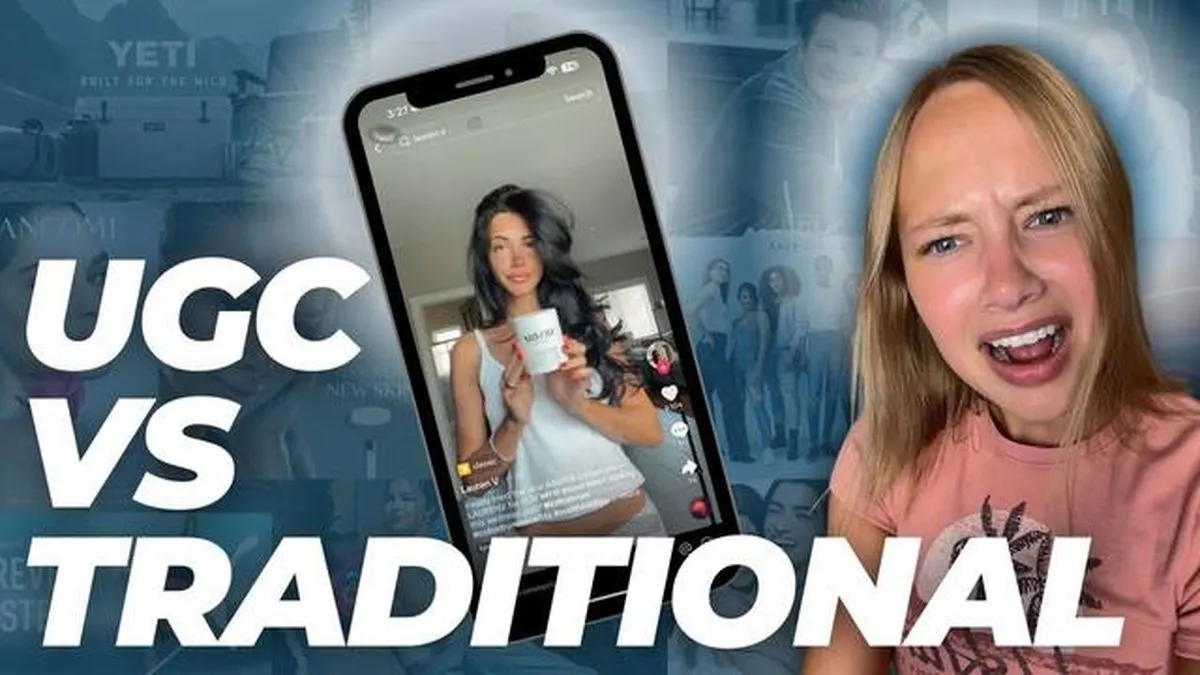
UGC vs Traditional Ads: The Question Brands Actually Ask
Key takeaways
- Traditional ads give a brand control and consistent branding, but they cost more because the brand pays for videographers, a production team, art directors and copywriters.
- UGC costs less and feels more personal because it shows a real person's point of view. Its weak spot is quality control, which matters most to luxury and premium brands.
- In a brand strategy meeting Gloria sat in on, the marketing director did not compare creators to each other. She asked whether creators would give a better return than putting the money into Facebook ads.
- Your real competition as a UGC creator is the rest of the marketing budget: more ad spend, agencies, in-house teams and influencers.
- Gloria stopped competing with other creators on price and started showing brands how content makes their existing ad spend work harder.
I was sitting in on a brand strategy meeting when the marketing director asked the question that changed how I see positioning. Comparing creators to each other was not on her agenda. She was weighing the whole idea of UGC against boosting the paid social budget the brand already had.
"Will working with creators give us better ROI than just putting that money into Facebook ads?"
Gloria Stonelake, quoting a marketing director, Skool post, 2025-08-13
That was when it hit me. As a creator, I was one line item competing against completely different marketing strategies.
The other side of that question is one I've lived too. I've watched brands spend $10,000 on a single Facebook ad and then try to negotiate my $500 video down to $200.
The same budget that goes to Meta without a second thought suddenly becomes "too expensive" the moment a real creator sends a rate.
Both moments are the UGC vs traditional ads question, asked by someone holding the money. To answer it, you need the honest pros and cons of each, which I laid out in my video, and a clear picture of who you're really up against.
What is the difference between UGC and traditional ads?
Traditional ads are made by the brand and its hired professionals. UGC is made by real people: customers, users or creators sharing their own take on a product.
When I say traditional ads, I mean any advertising that doesn't involve UGC. Think standard commercials, or videos and images the brand produces to show off its product or service. Everything in them is the brand promoting itself.
UGC stands for user generated content. It covers photos, videos, reviews, blog posts and social media updates that individuals share about a brand. In the video I called it the opposite of brand created content, and that is still the simplest way to see it. For the longer version with examples, read my plain definition of UGC.
As a marketing agency owner, I've dealt with countless traditional ads. One key difference between the two is how the content is created or sourced.
Before your next pitch, scroll the brand's current ads and sort them into two piles: made by the brand, or made by a real person. A feed that is all brand pile tells you exactly what gap you're filling.
What are the pros and cons of traditional ads?
Control is the big advantage of traditional ads. Cost is the big drawback, and how impersonal they feel comes right behind it.
A brand that makes its own ads keeps the branding, the tone and the way it presents itself the same every time. That consistency is how a company stays remembered, and I'd never tell a brand it doesn't matter.
The flip side gets expensive fast.
traditional content is almost always more expensive because of the production cost that comes with it
Gloria Stonelake, 1:33
A brand pays for videographers, a production team, an art director and copywriters if they aren't already in house. That bill adds up before a single ad runs.
The second drawback is harder to see on a spreadsheet. Traditional content leaves out the customer's point of view.
traditional content is less personal because it doesn't include customer insights or point of view
Gloria Stonelake, 2:03
Brands still get real value from traditional marketing. It was around before UGC was ever born, and it gives a brand more say over how the story gets told. The price is a bigger bill and an ad that speaks only in the brand's voice.
When you pitch, make the cost contrast plain. A traditional ad needs a professional production team, and UGC skips that bill while adding the customer's point of view the brand's own ads leave out.
What are the downsides of UGC for brands?
The main downside of UGC is that the brand gives up some control over quality and messaging. Quality and presentation can vary widely from one video to the next.
one downside is the lack of control over the content's quality and messaging
Gloria Stonelake, 3:04
Polished production keeps a brand looking the same everywhere. UGC can swing widely in quality and presentation, which sometimes opens a gap between the image a brand wants and what its audience actually sees.
Luxury and premium brands feel this most. They want a certain level of sophistication in their public image, and UGC doesn't always meet the high production standards some brands aim for.
That is why, in the video, I said a balanced approach is a smart call for a lot of brands. They run UGC and traditional content side by side and let each one do the job it does best.
Find out which downside the brand in front of you is worried about and answer it before they raise it. If you're pitching a premium brand, offer your videos as the personal layer next to the polished ads they already run, so they never have to choose.
Why do brands use UGC instead of polished ads?
Brands use UGC because it costs less to produce and people trust it more.
On cost, there is no big production team to pay. Brands get authentic, relatable material from customers or influencers that connects with other potential customers.
On trust, here is how I put it in the video:
people tend to trust peer recommendations more than brand messages
Gloria Stonelake, 4:38
Two numbers from that video are worth having ready when you talk to brands. The comScore research I cited noted that brand engagement can increase by 28% when users see both UGC and branded content. And as of 2024, UGC increased conversions by 10% when it was part of an online purchasing path.
UGC also sticks in people's heads better than polished ads, because it shows real customers sharing true experiences with a product.
Here is who each one suits. UGC is for brands that want an authentic, persuasive and personal approach. Traditional advertising is for brands that want to stay more professional and keep tight control over their messaging.
Put that 28% engagement figure in your pitch and pair it with the blend. It tells the brand you aren't asking them to fire their production team.
Who are you really competing with as a UGC creator?
You are competing with the rest of the marketing budget. Other creators are a small slice of it.
When a CMO plans a quarter, they aren't scrolling portfolios trying to decide between Jessica and Sarah. They're looking at a spreadsheet with lines like these:
- Increase Facebook ad spend by $30K
- Hire a traditional agency for $45K
- Expand Google Ads campaigns
- Build an in-house creative team
- Partner with macro influencers
- Try this UGC thing everyone's talking about
You are one line item on that list. That is what the marketing director in my meeting was doing out loud.
That's your real competition. Not the creator with better lighting or more followers. Facebook's algorithm. Google's targeting capabilities. Agencies with decades of brand relationships.
Gloria Stonelake, Skool post, 2025-08-13
Seeing the list changes what you work on. Your ring light setup stops deciding the deal. What decides it is whether you look like a smarter place to put money than the other five lines.
Creators who speak in metrics get higher rates than creators who speak in creative concepts. ROAS, or return on ad spend, is the revenue a brand gets back for every dollar it puts into ads, and it is the number that whole spreadsheet gets judged by. In my post I gave the two versions of the same pitch line:
- Creative concept: "I create authentic, engaging content."
- Metric: "My content typically generates 2.3x ROAS compared to standard display ads."
Rewrite the first line of your pitch so it talks about results instead of style. Only use a number you can back up from your own past work. If you don't have one yet, lead with what your content does for their ads, and start tracking results on every video you deliver.
Why will a brand pay $10,000 for one ad and haggle over a $500 video?
Brands treat traditional marketing as more legitimate because it arrives with formal proposals and account managers. Creator fees get treated like a favor, even when the strategic value is the same.
Brands will pay agencies six figures for strategy they'd get from creators for free during consultation calls. Agency retainers feel "official," even when they deliver fewer tangible results than a creator partnership.
One brand explained their "tight marketing budget" to me while their LinkedIn showed they had just added eight people to the team and moved into a bigger office.
creators offering the same strategic value through content get treated like we're asking for charity instead of providing business solutions
Gloria Stonelake, Skool post, 2025-09-15
The brands stuck in 2010 thinking will always exist. You don't have to convert all of them. The ones growing fastest already see creator partnerships as marketing investments.
So check before you discount. Look at whether the brand is hiring or moving offices. When they push your rate down, take the conversation to ad spend and results instead of dropping your price.
If a brand tells you there's no money, I wrote a whole post on what to say when a brand has no budget for UGC.
How to pitch UGC against ad spend and agencies
Price yourself against the ad budget and the agency, then show the brand how your content makes that money work harder.
That is the shift I made in these conversations. I quit fighting other creators on price and started competing with agencies on value and results. Use this on your next brand call:
- Show what the ad money buys: $10,000 in ad spend gets impressions, clicks and maybe some conversions
- Connect your content to that spend: strategic content improves every step from ad to purchase, so each ad dollar after it works better
- Put a number on the improvement: $500 for content that lifts their ad performance by 20% sounds reasonable instead of expensive
- Talk in their metrics: return on ad spend and conversions belong in your pitch, and "pretty" doesn't
- Call it an investment: every line on the CMO's spreadsheet is one, so make sure yours reads that way too
Quality creators solve business problems. We don't just make pretty videos to fill content calendars.
When you're ready to put a number on your work, start with how much to charge for UGC, then read how to charge more by selling outcomes. If a brand offers to pay you per view instead of per video, read how CPM campaigns pay before you say yes.
The next time a brand pushes back on your rate, picture that marketing director with her spreadsheet. She isn't asking whether you're the best creator. She's asking whether you beat Facebook ads, so walk in with that answer ready.
Gloria
Every figure in this post comes from my own deals, my own examples, my video or my posts to the UGC World community. The research numbers are the ones I cited in my video. None of it is a prediction of what you will earn. Your results depend on your work, your niche and the brands you pitch.
Frequently asked questions
What is the difference between UGC and traditional ads?
Traditional ads are made by the brand and its professionals, like commercials and polished product videos. UGC is content made by real users or creators, such as videos, photos and reviews, showing a personal point of view. Traditional ads win on control and consistency. UGC wins on cost and trust.
Why do brands use UGC instead of polished ads?
UGC costs less to make because there is no full production team, and people trust recommendations from other people more than messages from a brand. In her video, Gloria points to comScore research noting brand engagement can increase by 28% when people see both UGC and branded content.
Is UGC better than traditional advertising for every brand?
No. Gloria's take is that UGC suits brands that want an authentic, personal approach, and traditional ads suit brands that want tight control over their image. Luxury and premium brands care a lot about polish, so many brands blend the two.
Who does a UGC creator actually compete with?
When a marketing leader plans a budget, they compare UGC against other channels: more Facebook ad spend, an agency, Google Ads, an in-house creative team or bigger influencers. Gloria's advice is to position your work as the most effective marketing investment on that list.
About the author. Gloria Stonelake is co-founder of UGC World and Head of Creator Talent. She took home over $150K in one year from UGC, then built the agency brands pay to staff their campaigns with trained creators. Meet the UGC World team.
UGC World is a personal and business finance education and training company. Results described here are the experiences of the named creators and are not typical. Success depends on implementation and effort. We do not make claims about what you should expect to make.

