UGC for College Students: How Annalise Built It in the Cracks
Key takeaways
- Annalise, a 22-year-old university student in London, started UGC in the cracks of her week: applying in the evenings, the mornings and on weekends. She said even an hour or two a week is better than nothing.
- Timmy, a 19-year-old college student, told us his UGC work takes about 3 to 4 hours a week. He batch records: he sets aside time to script, starts with the hook for each brand, then records.
- Timmy started on a creator platform, realized he was being underpaid, and moved up to a $500 gig, then $750, then $1,000. His lesson: your time is valuable, so stop spending it on deals that are too low.
- Brian Ninh found UGC in his sophomore year, floated for a year and a half with no system, and quit. He came back after graduating with a virtual assistant handling outreach and systems that pitch and follow up for him.
- Put what you know and your results on your portfolio. Annalise added her pets, the countryside and wellness, plus a video that hit 34 times return on ad spend.
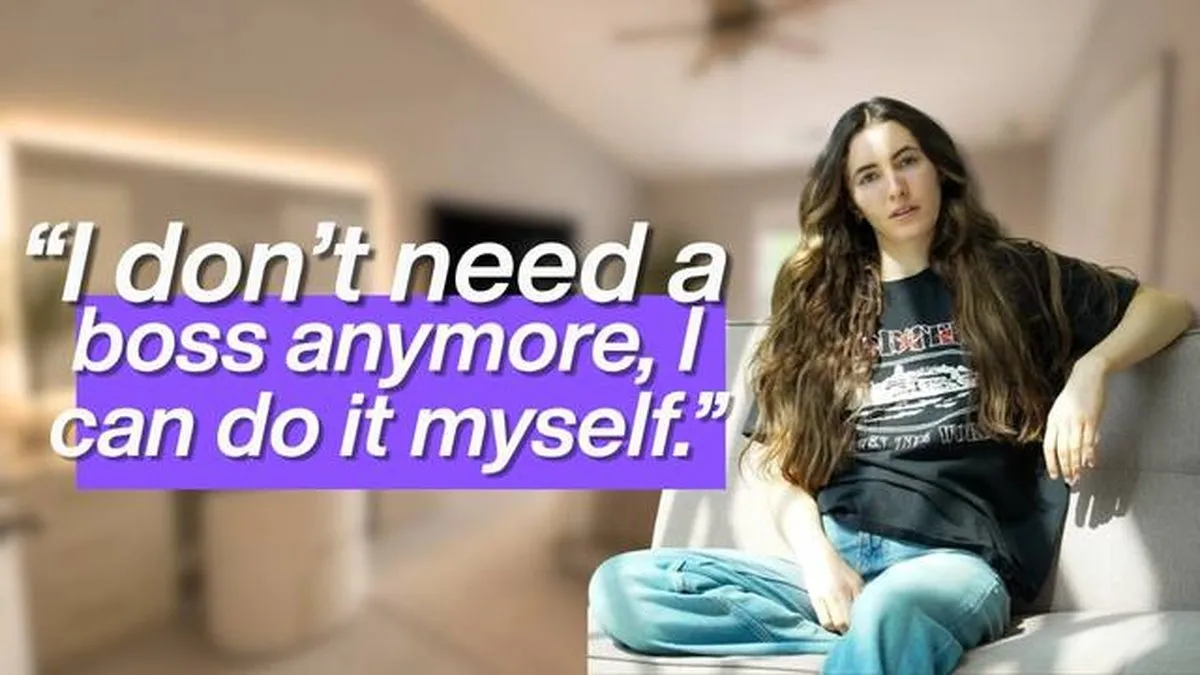
Annalise is 22 and based in London. Before UGC became her full-time job, she worked a part-time job of about 30 hours a week for a boss she called "a bit annoying." She had already cut down from a nine to five, and her UGC work happened in whatever gaps were left.
If you're looking up UGC for college students because your week already feels full, start with her. UGC means user generated content: short videos regular people film on their phones, which brands pay for and run as their own ads. Annalise was a university student with no audience and no experience when she began.
She found it scrolling Instagram. Making random bits of content was already a habit, so she gave it a go. When our podcast asked how she balanced a job, university and daily life, she didn't describe a perfect routine.
I was just doing it in the cracks whenever I could, you know, I'd apply in the evenings or in the mornings and then more often than not on the weekends as well. Even if it was like an hour, an hour or two a week is better than nothing.
Annalise, 0:13:16
A couple of jobs came in. Once the UGC money was decent, she dropped to part-time. Then she was earning more from UGC, she wasn't enjoying the part-time job, and she made the jump. She said the job turned into fuel, and she put that "uncomfortableness" into pitching and applying.
Her highest month was £7,500, which the host worked out to about $10,000. She recently got paid to go out to lunch with her mum three different times as part of a content shoot. And she has a trip to Indonesia coming up that she didn't have to ask anyone for time off to take.
What does UGC for college students look like?
UGC for college students is the same work any creator does: you film short, natural videos about a product and send them to the brand, and the brand pays you and runs them. You don't need a following, and the videos don't go on your page. Annalise explains it to her family in a few short lines.
Look, brand sends me product. I say good product because I've used it and it's great. I send brand back video. I don't have to post it on my socials. They pay me.
Annalise, 0:20:28
Timmy, a 19-year-old college student we interviewed, gave a definition every student will recognize. Picture a guy talking about how hard school is, and then he says he studies with a certain product. That is a UGC video. The ad sits inside something that feels like normal content.
So school is already your material. Exams, group projects, cramming, your dorm or your shared flat: those are the moments a brand can drop its product into.
If you're starting from zero, read how I would start UGC with no experience next. And if your follower count worries you, do you need followers for UGC covers it.
How much time does a UGC side hustle for students take?
Start with an hour or two a week. Annalise built her first jobs out of evenings, mornings and weekends. Timmy told us his UGC now takes about 3 to 4 hours a week.
Annalise's first worry, with a job already on her plate, was that UGC would eat too much time. Those early hours were a trade with her future self.
If I put in an hour or two in the evenings to apply, then it's something that will gain me so much more time back in the future.
Annalise, 0:15:20
She called it a temporary sacrifice. For a student, that means one or two evenings a week of applying instead of scrolling, for one semester, and then you see where you are.
Timmy said your first video will take 30 minutes, maybe an hour, and it won't be that great. As you do it more, he said, you get there.
Pick two time blocks this week, put them in your calendar next to your classes, and protect them.
How to batch film UGC between classes
Batch filming means you script and record several videos in one sitting instead of one at a time. Timmy said it's how UGC fits around a full college schedule.
I sit down, I record, I edit and I just send the videos out, upload them and it's anyone can do it.
Timmy, 0:01:03
He was blunt about it: batch recording is super useful, and you have to get into it. His plan is to block about two hours just to script, name the brands for that session, and write the hook first. The hook is the first line or two of a video, the part that stops someone scrolling.
Okay, I'm going to make videos for this brand, this brand, and this brand. I'll start here. I'll start with the hook for each video, and then I'll go from there.
Timmy, 0:04:38
Before he had a system, Timmy spent two hours just finding one video idea for his personal content. If the idea was weak, he posted it anyway because he had nothing else.
His fix was an idea bank with three sections he pulls from whenever he needs a video. He said a better system can take you from 5 to 8 hours a week down to 2 to 4.
Timmy's batch session, step by step:
- Block about two hours to script, with the brands you're filming for written down.
- Write the hook for each video before anything else.
- Record, edit and send in the same sitting.
- Pull ideas from your idea bank so you never start from a blank page.
For more on the filming side, read how to batch film UGC.
Your student life is your UGC portfolio
Brands want videos that feel real, and a student's week is full of real moments. Annalise said a lot of creators get stuck on pretty aesthetic shots, when many brands want genuine, authentic videos.
She also put what she already knew into her portfolio. In her case that was her pets, living in the countryside and wellness.
I've got pets, I live in the countryside, I like wellness, anything that I'm knowledgeable about, I would whack that in the pictures as well.
Annalise, 0:16:55
Make your own list. Your major, your sport, your part-time job, your skincare routine, your commute, your cooking on a budget. Each one gives you something to film that you know well.
Annalise added one more move most beginners skip. Put the results on your portfolio, beside the videos.
A lot of people will upload their pretty videos, but they won't say what the actual statistics of that video were.
Annalise, 0:16:22
One of her videos got 34 times ROAS. ROAS means return on ad spend: how much money the brand made back for every dollar it spent running the ad. She put that number on her portfolio, and she said it was very, very helpful. When a video gets a result, put the number next to it.
She was also honest that her first UGC video was pretty bad. After that she kept practicing, put more effort into every client video, and the repeat clients came.
Should college students take low-paying UGC gigs?
Take a few for experience, then raise your rate the moment you see you're underpaid. Timmy started creating content for the first time about 30 days before our interview, and he began on Sideshift, a creator platform. He landed a couple of gigs there and realized he was being underpaid.
I got a couple of gigs and I realized I was getting underpaid and so I kind of scaled up from there and I landed my first $500 gig and then $750 and then now $1,000.
Timmy, 0:00:31
Early on he posted a video saying he would make $2,000 from UGC in 20 days. He told us he hit it and landed four or five deals. Then he admitted he put in far more hours than he needed because he didn't know what he was doing yet.
I did choose some bad deals. I'll be honest. I kind of wasted my own time. You have to remember that your time is valuable. So, don't go and waste it.
Timmy, 0:08:12
One deal he took is way too low for him now, he said, and at the start any experience was great experience. With a class schedule, the time cost is what hurts. Every hour on an underpaid video is an hour you don't have for a better one or for your coursework.
I go deeper on when a low offer is worth taking in should you take low-paying UGC deals.
Timmy had a second reason to do UGC in college: connections. Through brand work he has talked with people building their own businesses and startups and people with thousands of followers. He is using that to aim for an internship or a role in the AI space.
Where do university students find their first UGC brands?
Use a mix of creator platforms, direct emails to the person in charge at a brand, and repeat clients once you've done good work. That is how Annalise described her pipeline.
Her first paid job came from applying on Backstage. After that she used several platforms, emailed brands directly, and picked up some work through her personal brand. Today, repeat clients make up a large share of her work. If she did a good job for a client, she said, they tend to come back.
She called it a snowball. Apply to a lot at first to get your practice in. Then start pitching, and set up a system for emails to go out every single week. You get a yes, you do a good job, they come back.
Your weekly pipeline, built from what she described:
- Apply to briefs on a creator platform.
- Email brands directly, aimed at the person in charge.
- Send pitch emails out every single week.
- Do the work well enough that past clients come back.
What Brian's year and a half of floating teaches students
Brian Ninh shows what happens when a student dabbles with no system. In college he was desperate for a side hustle that would bring in an extra $5,000 a month. Stocks, options, crypto, dropshipping, Amazon FBA, NFTs. He laughs when he talks about it: "The niches of niches, bro."
UGC showed up in his sophomore year, and it looked different. No following needed, free products, film some videos.
For almost a year and a half he floated, with no system and no real strategy. He'd send some outreach, get ghosted, land a random gifted collab, make zero dollars. A gifted collab is when a brand sends you free product instead of paying you.
He bought a course, watched every module, took notes and felt productive. Nothing happened. So he quit, went back to the marketing degree he openly says he "didn't really care for," and graduated. Then he looked at his options and thought, this cannot be it.
When he came back to UGC, he did it differently. He got a virtual assistant overseas at $3.50 an hour to handle his outreach across five platforms, about four hours a day of work that used to drain him. Then AI systems that reply to brand emails, send cold pitches and follow up automatically, so he never loses a deal because he forgot.
He also got coaches who had done it to look at his portfolio, outreach and pricing. And he joined a community of creators, brand owners and agency people.
Six months later, when I wrote about him in December 2025, Brian was sitting on $7,000 that month, at 22.
Online money is real. It truly is. It sounds too good to be true, but it truly is real. So many people are doing it and you're just scaring yourself away from the opportunity that could change your life.
Brian Ninh, Skool post, 2025-12-05
You don't need a VA in your first semester. What Brian lacked in college was a system: no regular outreach, no follow-up and no one checking his work. You can set up the first two in your first semester. If you're curious about outsourcing later, read when a UGC creator should hire a virtual assistant.
What if people from school see your UGC videos?
Some will, and Annalise found it really is not that deep. Back when TikTok was still Musical.ly, she grew an account to 20K, people from her school found it, and she got so shy.
Later she noticed something. A lot of the girls who said things to her had TikTok accounts themselves. They just hadn't grown them yet.
When she started UGC, friends did see her face in ads. They'd send it to her and say, look, you're in my video. She thinks a lot of people overthink how much anyone looks at the video.
Will I destroy my own dreams just because I'm scared that someone else is going to talk about me?
Annalise, 0:07:09
Timmy said feeling natural on camera was the hardest part for him at first. Watching himself back felt super weird. His fix was repetition and one reminder.
You just have to remember like no one really cares what you're doing and you're getting paid for it. So, that always helps.
Timmy, 0:03:05
Annalise's mindset shift came from one question. Watching other people succeed, she asked, why can't that be me?
After that, other people's circumstances stopped being her excuse. In her words, there was no reason why she couldn't do it, and now she has.
Timmy put it even shorter. All you really need is your phone. So what's stopping you?
The results in this post are what Annalise, Timmy and Brian told us about their own work. They aren't typical results and they aren't a promise of what you will earn. Your outcome depends on your effort, your skills and the brands you work with.
Gloria
Frequently asked questions
Can college students do UGC?
Yes. Annalise was a 22-year-old university student in London when she built paid UGC work, and Timmy started at 18 while in full-time college. UGC means making short videos for brands to use on their own pages and ads, so you need a phone and samples of your work, not a big following.
How many hours a week does UGC take for a student?
Timmy told us his UGC takes about 3 to 4 hours a week once he started batch recording. He said a better system can take you from 5 to 8 hours a week down to 2 to 4. Annalise started with whatever she could fit in the evenings, mornings and weekends, and said even an hour or two a week is better than nothing.
Should a student take low-paying UGC gigs?
Timmy took a few early on and said any experience at the start is great experience. He also said he wasted his own time on bad deals. He moved from underpaid gigs on a creator platform to a $500 gig, then $750, then $1,000.
Do I have to post UGC videos on my own social media?
No. Annalise described it simply: the brand sends the product, you film the video, you send it back, and you don't have to post it on your socials. The brand runs it on its own pages and ads.
About the author. Gloria Stonelake is co-founder of UGC World and Head of Creator Talent. She took home over $150K in one year from UGC, then built the agency brands pay to staff their campaigns with trained creators. Meet the UGC World team.
UGC World is a personal and business finance education and training company. Results described here are the experiences of the named creators and are not typical. Success depends on implementation and effort. We do not make claims about what you should expect to make.

