Why I Stopped Trying to Be Original: The TikTok Ads Library for UGC
Key takeaways
- In the TikTok ads library you can search any brand, see every ad it is running right now and check how long each ad has been active.
- An ad that has been running for three months is making the brand money, because brands stop paying for ads that lose them money.
- Copy the format of a winning ad (structure, pacing, hook, when the product appears, the call to action) and write your own script.
- Brands want a version of what already works for their competitors, so study the competitors of every brand you want to work with.
- Keep a swipe file of proven formats so every new video starts from something that already converts.
I used to spend hours on every UGC video trying to invent a concept no one had seen before.
My belief was that brands wanted something new and different, so I tried to make every single video special.
Then I learned how Dave uses the TikTok ads library. You search any brand and see every ad it is running right now. Then you check how long each ad has been active.
The rule is simple. If an ad has been live for three months, it makes money.
That one habit completely changed how I approach UGC.
If an ad has been running for three months, that means it's working. Period. Brands don't keep running ads that lose them money.
Gloria Stonelake, UGC World community post, 2025-11-23
Turns out I had it completely backwards. Brands want you to look at what their competitors are running, see what's working, and hand them a version of that.
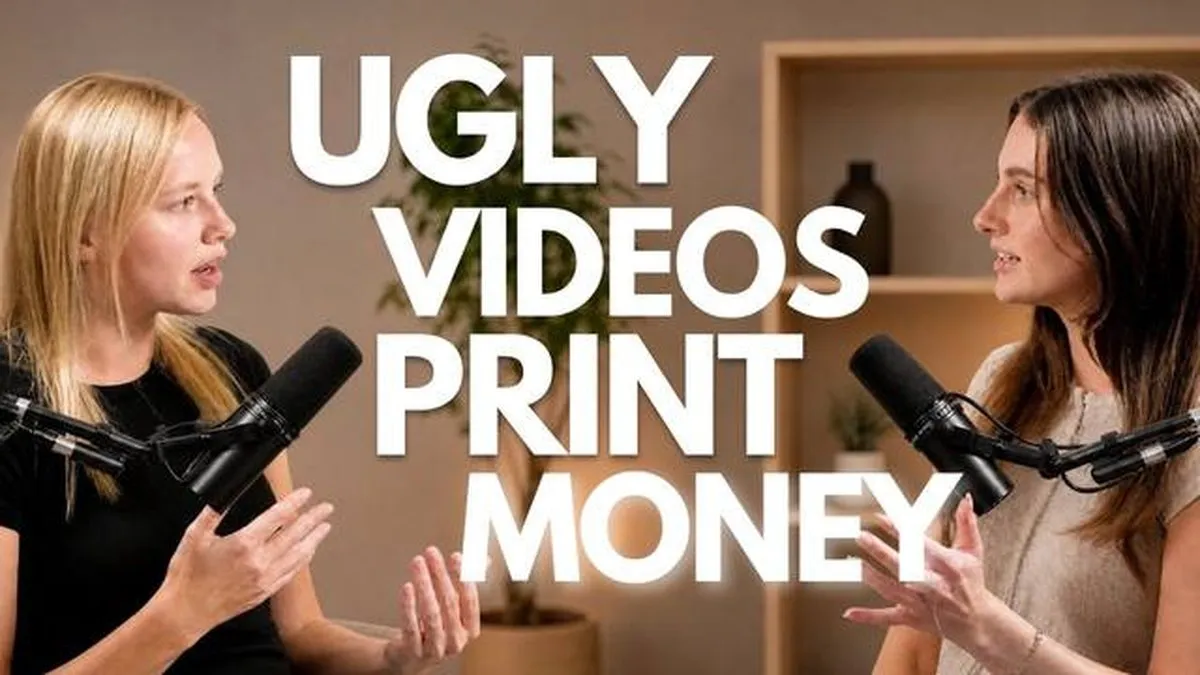
Most creators don't even know this library exists. When my friend Sav and I sat down in Miami to talk about how we study winning videos, we landed in the same place Dave did.
How do you use the TikTok ads library for UGC?
Search a brand, look at every ad it is running, and find the ones that have been active the longest. Those are your winners. Study them, then make your own version of the format.
UGC means user generated content: short videos that regular people film on their phones for brands, which the brand then runs on its own pages or as ads. You need zero followers for it. Brands pay you for the video itself.
Here is the routine Dave taught:
-
Open the ads library, search a brand you want to create for, and look through every ad it is running right now.
-
Check how long each ad has been active.
-
Pull out the long runners and study what they have in common.
-
Film your own version of that format and test it.
The work happens in step three. Anyone can scroll a library. Your job is to figure out why the long runners keep running.
How do you know which UGC ads are actually working?
Check how long the ad has been running. Brands pay to keep every ad live, so an ad still running after months is an ad that pays them back.
This matters because so many creators guess. They hear "you need to make content that performs" and try a harder hook, then a new angle, then film ten versions of the same video hoping one hits. I called that throwing spaghetti at the wall, and it is expensive trial and error.
The library swaps the guess for evidence. If a format is working for a brand's competitor, there's a very high chance it will work for that brand too. That is why brands want a version of what already works.
This gets more important as brands move toward performance based pay. CPM means cost per thousand views, and on a CPM campaign the creator gets paid on how the content performs. Knowing CPM matters and knowing how to make content that lowers it are two different skills. The second one starts in the library.
What should you study inside a winning UGC ad?
Study the structure, the pacing and the psychological triggers that make people stop scrolling and pay attention. Ignore the exact words. You want the skeleton.
Start with the hook, which is the first line or moment of the video, the part that decides whether someone keeps watching. Then watch where the product shows up and how the ad ends.
Sav is a full-time creator and TikTok Shop affiliate, and she told me the exact lens she watches through.
I'm looking at videos through the lens of what's the hook, when do they add the product, what's the CTA, and how can I take that and replicate it.
Sav, 0:18:22
The CTA is the call to action: the line at the end that tells the viewer what to do next. Break every long runner down with this checklist:
- Hook: what happens in the first three seconds?
- Product moment: when does the product first appear, and how?
- CTA: what does the creator ask the viewer to do at the end?
- Format and pacing: is it talking head, street interview, podcast, selfie style or back camera, and how fast does it move?
My first mentor never taught me this. I had to figure it out the hard way, and the switch happened when I changed how I watched.
I stopped watching videos like it was entertainment and I started watching videos to study them.
Gloria Stonelake, 0:17:47
If you want to go deeper on the first three seconds, read how I write UGC hooks.
Copy the format, keep the script your own
Use the same structure, pacing and triggers as the winning ad, then write your own words for your own product. Never lift the script word for word.
I say the same thing to my students every time this comes up.
Copy, make better. Copy what's working, but just make it better in your own way. You don't have to reinvent the wheel.
Gloria Stonelake, 0:15:13
When everyone is zigging with one format, zag a little. Ask yourself how you would make that same video ten times better. You can add to the script or add something to the video so yours beats the one you copied.
Sav calls it the 80/20 method. Take 80 percent from what is already working and make 20 percent your own. She said the creators who see the worst results in the beginning are the ones trying to invent original ideas, and she put herself in that group when she started UGC.
How are you going to make new original ideas if you don't know what's working yet?
Sav, 0:15:13
Her point was practical. A creator guessing from scratch skips the CTA and has no idea where the body goes or where to plug in the product.
Following a proven format hands you all three. Learn the foundations first and you earn the right to be original later. For a full walkthrough of tweaking a proven video, read how to make viral UGC by tweaking a winner.
Why formats matter more than editing tricks
The format carries your idea. Editing style is a small piece of why an ad works, so spend your study time on the format and the script.
When Sav and I talked it through, we listed the formats that keep working: podcast style, street interviews, talking head, selfie style, back camera and the 0.5 lens. A lot of creators study editing styles instead. In our conversation, editing came out at about five percent of the picture.
A strong format lets your story land in a way that makes people stop scrolling.
Polish matters less than the script, too. Sav told me one of her highest converting videos made her $20,000.
She filmed it at 2 a.m. with her hair not done and the text in the wrong spot on screen. The script was so good and so real that it blew up anyway.
So when you break down a long runner, write the format name first. That label is what you will search your swipe file for later.
Which brands should you break down first?
Start with a handful of brands in the niche you want to work in, plus their direct competitors. A small set studied deeply gives you real patterns to work from.
Competitors are the secret here. Brands want a version of what their competitors are already running, so the ads library of a competitor is a list of what your future client wants to buy. Sav pointed out that this is exactly the research most creators skip.
They won't test different hooks. They won't make sure the lighting's good. They won't make sure the caption's in the right place or research their target audience or research the brand's competitors.
Sav, 0:07:45
Pick your niche first. If you are still deciding, my post on the highest paying UGC niches explains why I would start with boring brands. Then search each brand and its closest competitors, and break down every ad you find that has been running for months.
That research pays off a second time when you reach out. You walk into a pitch already knowing what works in that brand's market. My post on how to pitch brands for UGC shows the first email I would send.
How to build a UGC swipe file so you never start from scratch
A swipe file is your saved collection of proven ads and formats, with notes on why each one works. Every time you find a long runner, log it.
Here is what I would track for each ad:
- Brand name and what it sells
- How long the ad has been running
- Format name
- Hook, written out word for word
- When the product appears
- CTA
- One idea to make it better
- Results of your version once you test it
That last line closes the loop. You study what works, replicate it, test your version and see what performs. Over time your swipe file fills with formats you know convert, and a blank page stops being a problem.
When a brand sends you a brief, open the swipe file before you write a word. Then turn the brief into a shot-by-shot plan with my guide on planning a UGC video before you hit record.
How do you study ads without falling into the scroll?
Go in with one clear job: find formats, hooks and CTAs. Clean up your feed so the app shows you more of that and less of everything else.
Sav handles this by removing the option to get distracted. Anything that is brain rot gets an "uninterested" tap, and she keeps an account built for studying winning scripts. Social media is for inspiration only, so when a random dance video shows up, she skips it.
For me it came down to knowing what to look for. Once you know to watch the hook and the first three seconds, every ad turns into a lesson. Your brain stays switched on, and you stop getting looped into the feed.
What to do tonight with the TikTok ads library
Open it, search one brand in your niche and log its longest running ad. I used to think creativity meant inventing everything from zero, and that belief cost me hours on every video.
Now I see creativity as taking a proven format and executing it better than everyone else. That is what Dave's method showed me, and it is why I study the ads library before I film.
Write down that ad's hook, its product moment and its CTA. That is the first entry in your swipe file.
Disclaimer: Results vary from creator to creator. Nothing in this post promises any income or outcome. Earnings mentioned by any creator describe their own experience only.
Frequently asked questions
What is the TikTok ads library?
It is a tool where you can search any brand and see every ad that brand is currently running, along with how long each ad has been active. UGC creators use it to find ad formats that are already working instead of guessing.
How do I know if an ad in the TikTok ads library is a winner?
Look at how long it has been running. The rule of thumb is that an ad running for three months is working, because brands do not keep paying for ads that lose them money.
Is it okay to copy another brand's UGC ad?
Copy the format and write your own words. Keep the structure, the pacing and the psychological triggers that make people stop scrolling, then write a fresh script for your product and add something that makes your version better.
What should I put in a UGC swipe file?
Save each long-running ad you find with the brand name, how long it has been live, the format, the hook, the moment the product appears and the call to action. Add a note on how you would make your own version, then record how your version performed after you test it.
Do I need original ideas to succeed with UGC?
Gloria and Sav both say you start by learning what works. Sav uses an 80/20 split: take 80 percent from formats that are proven and make 20 percent your own.
About the author. Gloria Stonelake is co-founder of UGC World and Head of Creator Talent. She took home over $150K in one year from UGC, then built the agency brands pay to staff their campaigns with trained creators. Meet the UGC World team.
UGC World is a personal and business finance education and training company. Results described here are the experiences of the named creators and are not typical. Success depends on implementation and effort. We do not make claims about what you should expect to make.

