How I Turn a UGC Creative Brief Into a Plan Before I Film
Key takeaways
- Filming is about 20% of a UGC video. The other 80% is strategy, research and understanding the customer, and it happens before the camera turns on.
- Read the UGC creative brief closely, especially the part that says what the brand wants, then rewrite it in your head as what a happy customer would tell her best friend over coffee.
- Before you film for any brand, find its top three competitors, break down their highest viewed videos (format, hook, text, music, feeling) and build from what is already working.
- Turn research into a script plus a line by line shot plan: camera angle, editing note and on-screen text for every sentence.
- Run a pre-filming checklist: script formatted in the teleprompter, mic plugged in, light facing a window, grid on, folders ready, storage and battery checked.
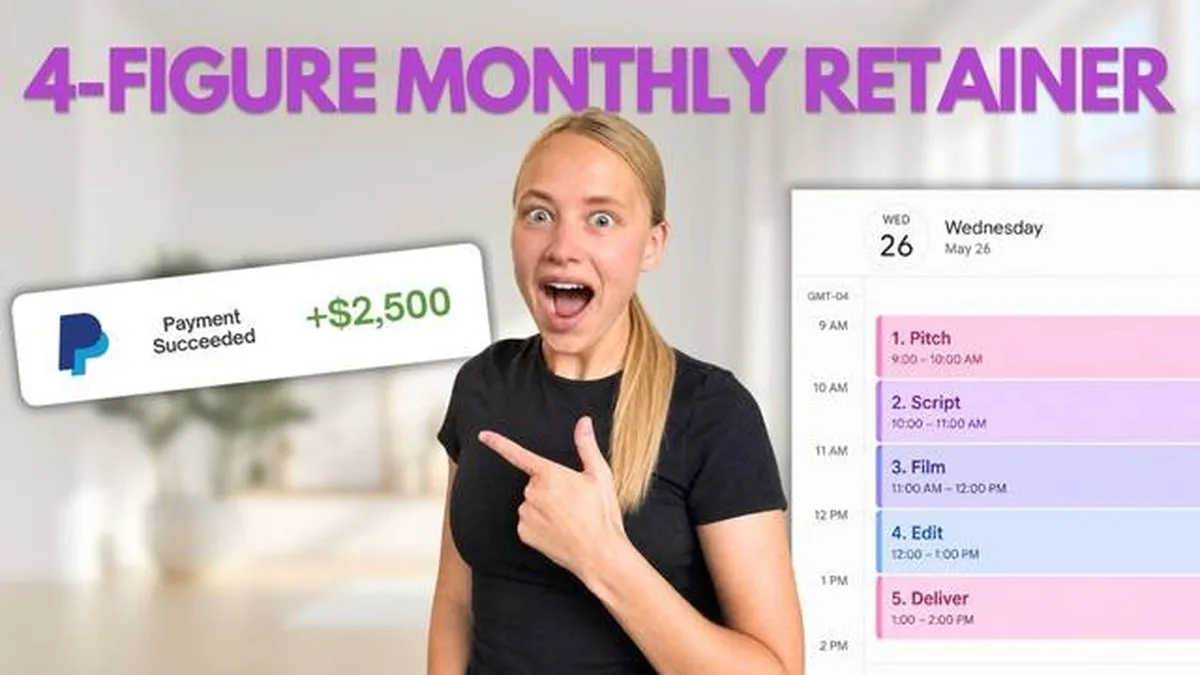
AI Apply, a tech company, pays me $2,500 a month to film content for them. My videos go on their YouTube and run as ads. The deal started as a single $450 paid collab, and the monthly retainer came after.
When I sat down to plan our second collab, my ring light was out and my mic was on. I still did not film for a while. First I read the brief, pulled up their competitors, studied the viral videos in their niche and wrote the scripts.
That is the boring part of UGC: reading, thinking and strategizing. It is also why the brand came back.
Most beginners skip that part. They get a UGC creative brief, skim it, set up the ring light and start talking. Then they spend hours chasing one good take, because they are figuring the video out while the camera is rolling.
Filming is about 20% of a UGC video. The 80% is the plan, and the plan starts with the brief.
Why is filming only 20% of a UGC video?
Filming is the smallest part because a good video is decided before you record it. By the time I press record, I already know every line, every shot and every piece of on-screen text. The camera is where I carry out a plan.
The actual filming is maybe 20% of the work. The other 80% is strategy, research, and understanding customer psychology.
Gloria Stonelake, Skool post, 2025-10-02
UGC means user generated content: short videos real people film, paid for by brands and posted on the brand's pages or run as ads, like my AI Apply videos. The brand is paying for a result, so your plan has to answer their questions first.
Before you touch the camera, write down three things about the buyer. List the objections they have, the proof they need to see before they trust the product, and the emotion that finally gets them to buy.
Creators who wing it on gut feeling end up competing on price with thousands of other creators doing the same thing. The ones who plan can work fast, because the thinking is already done. My first script in that AI Apply batch was about a two minute video, and I had maybe one, two or three mess ups reading it.
How to read a UGC creative brief so you catch what the brand wants
Read the UGC creative brief slowly, and treat the part that says what the brand wants as the most important paragraph you will get. That section tells you what the brand will judge your video on.
The AI Apply brief was general. It explained the company: an AI agent that works 24/7 to help you get your dream job, auto applies to hundreds of jobs and saves hours or days of application time. Then it had a short section on the perfect creative.
This is what they want, the perfect creative. This is what they expect, which is gold right here. Do not brief over this when it comes to the briefs that you get.
Gloria Stonelake, YouTube, 0:13:42
The real instructions came separately, in the CEO's email. He listed the videos he wanted: how to automate your job applications end to end, how to build an ATS friendly resume with AI, and a video on the AI interview simulator. Each one was to be a 60 second horizontal video.
The brief also said to film in natural lighting. If I had stopped at the general brief, I would have missed the exact videos the CEO wanted and the shape he wanted them in.
Copy every requirement into one place before you write a word. My Drive folder for each collab holds the basic information on the collab, how many videos it needs, a link to the email thread and, later, the footage. I call it my single source of truth: everything about one brand lives in one place, so I am never scattered across apps trying to remember what the client asked for.
Rewrite the brief as the customer talking to her best friend
Once I know what the brand asked for, I rewrite the brief in my head as the customer talking. Brands write briefs in their own voice, and their customers talk nothing like that.
A skincare brand once sent me a brief asking me to talk about how amazing their line is and how it has changed my routine. That produces the polished influencer voice people skip past in 0.4 seconds. So I changed the assignment.
new brief, in my head: "write what the customer would say about this product to her best friend over coffee."
Gloria Stonelake, Skool post, 2026-06-14
The customer version sounds like someone who bought it because a friend would not stop talking about it, was skeptical after trying 80 serums, and is three weeks in with her forehead breakouts basically gone. When you hear that, you feel told by someone you trust instead of sold to.
To write that way, picture one specific person who is already a customer. Give her a name, an age, a morning routine, her real reason for buying and her real reason for doubting it first. Then write what she would say. The brand's feature mentions and CTA still go in, but they come second to her voice.
This matters most in a niche you have never worked in. Before my first AI Apply collab, I had never broken into the job applying space, and if you are newer, chances are you have not worked in your client's niche either. So do the research until you can talk about the customer's problem the way she would.
How do you do UGC competitor research before you script?
Find the brand's top three competitors, open their TikTok and Instagram, and break down their highest viewed videos before you write anything. This is called swiping, and it tells you what the market already responds to.
If you do not know the competitors, ask the brand. No answer? Research the industry and pick two or three yourself. For each one, write down:
- Format: talking head, green screen, product demo, voiceover or B-roll (the extra footage that plays over your voice)
- Hook, meaning the first line or visual that stops the scroll
- On-screen text or music, if any
- Whether it feels emotional, educational or satisfying
- How you feel after watching it
you are not copying anyone. you are studying what the market is already responding to and then you are making it better. copy make better. that is the whole strategy.
Gloria Stonelake, Skool post, 2026-06-07
For AI Apply, the competitors I studied were LazyApply and Final Round AI. Their content had no emotional storytelling. It was a cool feature, then another cool feature, with no pain point walked through.
That gave me my angle: keep the format that works in the niche and add story and emotion on top of it. Every company needs a story, because people buy from people, and people have problems.
I once reviewed a newer student's portfolio with a talking head video for an app. The proven format for apps like that is demos and green screens, and I saw that mismatch leading to brands ghosting her pitches for weeks. Do this research even for unpaid portfolio videos.
Keep it all in a swipe doc. List every client, write three competitors under each, then list their top videos with the hook style, format and feeling. For another place to find proven formats, read how to use the TikTok Ads Library to find UGC formats.
Study the viral videos brands keep paying to run
After competitors, look at the brand's own viral videos, and pay the most attention to the ads it keeps running. Brands see within two to three months whether an ad dies out or wins, so an ad that has run for much longer is proof.
On a brand's page, check the most popular posts first, along with anything pinned. For AI Apply, the second most viral video on their page was a demo green screen I made for them in our first collab. It had 1.9 million views, and they had been running it as an ad for about eight months.
I was even wearing the same shirt while I studied it.
That video became my starting point. It was working, so I kept the format and asked how to make it better. My audio was a little muffled in that one, so crisper audio was fix number one. Fix number two was digging deeper into the pain points, while sticking to the new angle the brand asked for.
Also look at what is missing. AI Apply's other content was heavy on stock footage, which told me they were sleeping on their content strategy.
When you study a viral video, decide for yourself why it went viral, then let AI help you build on it. The skits I found from another AI tool went viral because they were reactive, and people like seeing real-time reactions.
How do you write a UGC script and shot plan?
Write the script for what you will say, then write a shot plan for how each line looks: camera angle, editing note and on-screen text for every sentence. You need both before you film.
Here is the first line of the AI Apply plan:
- Line: "I applied to hundreds of jobs and didn't send a single one myself."
- Camera: close-up selfie, direct to camera, slight smirk
- Editing note: hard zoom on "hundreds"
- On-screen text: "hundreds of apps, zero effort"
Every line got the same treatment. The next one, about waking up and copying and pasting on LinkedIn, was A-roll (you talking to camera) with B-roll of me in bed scrolling my phone, looking depressed. When the plan lists shots like "creator tired" and "shock smile," it is putting the emotion on screen so viewers think "that's me."
I build this in Poppy AI, and ChatGPT works too. The brief, the competitor analysis, the viral video breakdown and the CEO's list of videos all go in. Then I ask for scripts that cover the videos the brand asked for and use the viral formats from my research, plus a reason why each one works. If I understand why something works, I can repeat it.
I paste the five scripts and the creative strategy into a Google Doc, one tab per script, and work on one at a time. Then I read every line with my own judgment, because AI is not perfect.
So, you know the video the best. You have your own individual creativity.
Gloria Stonelake, YouTube, 1:36:47
One more test for every script: if a smart 15 year old would not understand it in the first three seconds, rewrite it. Industry terms in a hook lose the person scrolling at 11pm. For the structure I use on every script, see my UGC script template, and for the psychology behind lines that sell, read how to make UGC videos that convert.
What to check before you film a UGC video
Check your script, mic, light, framing, folders, logins, storage and mood before the first take. Several items on this list are here because they went wrong for me on a real shoot.
-
Script in the teleprompter, formatted. Paste it in and put each sentence on its own line with space around it. Badly spaced text makes you misread lines. Name the file after the video.
-
Mic plugged in and tested. I once ran up two flights of stairs to grab a piece of my mic I left downstairs. Some B-roll I filmed without a mic had volume I did not like later.
-
Light facing a window. The AI Apply brief asked for natural lighting, so I found an office with a big window and faced it directly.
-
Grid on, centered, clean background. I turn on the camera grid, center myself and move anything distracting, even a plant in a weird spot.
-
Folders ready. One Drive folder per video (video one through video five), plus one for general B-roll. I upload right after filming each video so the footage never gets mixed up.
-
Software access sorted. For app and software brands, get the company or creator login. If a brand makes you buy the platform, do not move forward with them. I once bought one by accident and ended up on a subscription I did not know I was on.
-
Storage and battery checked. During the AI Apply project my camera died and I had to re-film on a different day. Later the SD card in my other camera filled up mid-recording.
-
Warm up. I force myself to laugh for 30 seconds or think of a good memory.
really really idiotic, but I force myself to laugh for 30 seconds and then I get in a better mood or think of a good memory at the same time.
Gloria Stonelake, YouTube, 0:40:42
While you film, redo the whole sentence when you stumble instead of fixing one word, so the edit sounds smooth. For the rest of the filming process, here is how to film UGC videos on your phone.
How to use your past videos to plan the next one
Pull up your top three performing videos before you plan the next one, and write down what their hooks have in common. Every video you post gives you data, and creators who ignore it start from zero every time.
Check whether each hook is emotional, shocking, a question or a demo. Then look at your lowest performers and find the difference. Most of the time it comes down to one of three things: the hook did not stop anyone, the concept was too niche for the average person scrolling, or the format did not match what the market wants right now.
Write those findings down before you plan the next video. Your next brief then starts from what has already worked for you.
I planned the first five AI Apply videos this way. Then they sent me another 10, so that month turned into more than 15 videos for one brand.
Disclaimer: The results in this post are Gloria's own and are shared as examples, not promises. Your results depend on your effort, skills and the brands you work with.
Frequently asked questions
What is a UGC creative brief?
A UGC creative brief is the document a brand sends that explains the product, the customer and what they want from your video. Some briefs are general and explain the company. The exact deliverables, such as video length, format and which feature to show, can arrive separately, like in an email from the founder. Read all of it closely, because it tells you what the brand will judge you on.
How do you plan a UGC video before filming?
Start with the brief, then research the brand's top competitors and the most viewed videos in the niche. Write the script as the customer would talk, then add a shot plan for every line. Set up your teleprompter, mic, lighting and folders before you press record, so filming becomes execution.
How do you do UGC competitor research?
Pick the brand's top three competitors and open their TikTok and Instagram. Look at their highest viewed videos and write down the format, hook, on-screen text, music and the feeling you get after watching. That breakdown becomes your content strategy for the brand.
Should beginners do competitor research for portfolio videos?
Yes. Gloria tells beginners to swipe competitors even for unpaid portfolio videos. She saw a newer creator make a talking head video for an app when demos and green screens are the trending formats for many apps, and she saw that mismatch leading to brands ghosting her pitches for weeks.
About the author. Gloria Stonelake is co-founder of UGC World and Head of Creator Talent. She took home over $150K in one year from UGC, then built the agency brands pay to staff their campaigns with trained creators. Meet the UGC World team.
UGC World is a personal and business finance education and training company. Results described here are the experiences of the named creators and are not typical. Success depends on implementation and effort. We do not make claims about what you should expect to make.

